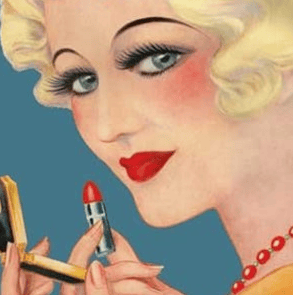
The Great Depression re-shaped every corner of daily life and beauty was no exception. When money disappeared and luxuries became un-reachable, women didn’t stop caring about how they looked. Instead, they adapted with remarkable creativity, turning beauty into an act of resilience, dignity and emotional survival.
Beauty as Survival, Not Vanity
In the 1930s, beauty wasn’t frivolous it was stabilizing. A touch of colour, a neat hairstyle, or a polished face helped women feel anchored in a world that had become unpredictable. Even when cosmetics were scarce, the desire to look “put together” remained strong. Beauty became a small, daily ritual of hope.
1. DIY Makeup From the Kitchen
With store‑bought cosmetics suddenly out of reach, women turned to household ingredients:
- Beet juice and berries for lip and cheek tint
- Burnt cork or soot mixed with petroleum jelly for mascara
- Flour or powdered rice as face powder
- Lemon juice for natural highlights
These weren’t trends — they were necessities. Yet many of these hacks feel surprisingly modern, echoing today’s “clean beauty” and minimalist routines.
2. Petroleum Jelly: The Depression-Era Hero
Petroleum jelly became the most versatile product of the decade. Women used it as:
- lip gloss
- brow groomer
- cuticle cream
- cheek highlight
- cold cream substitute
It was cheap, accessible, and endlessly adaptable — the original multi‑tasking beauty product.
3. Repair Culture: Nothing Was Thrown Away
The Depression created a “make it last” mindset:
- Lipsticks were melted and reshaped.
- Compacts were refilled instead of replaced.
- Perfume bottles were stretched with water or alcohol.
- Clothing was mended, patched, and re‑styled.
Beauty became intertwined with preservation and resourcefulness.
4. Minimalist Manicures
Cutex existed, but not everyone could afford polish. Women relied on:
- chamois cloths for buffing
- sewing scissors for cuticles
- kitchen oils for shine
The result was a clean, natural manicure — a look that feels timeless even today.
5. Hollywood vs. Real Life
While regular women were stretching every penny, Hollywood was selling glamour. Stars like Jean Harlow and Carole Lombard embodied a fantasy of polished beauty that offered escape from economic hardship. Women admired it, but they adapted it to their reality — softer, simpler, more attainable versions of screen‑star looks.

Why This Era Still Matters
The Great Depression proved something profound: Beauty isn’t about luxury — it’s about identity, dignity and emotional resilience.
Women didn’t stop caring about themselves. They simply found new ways to express beauty with whatever they had. Their resourcefulness still echoes in today’s beauty culture:
- multi‑use products
- homemade skincare
- minimalist routines
- “no‑waste” beauty
- natural tints and stains
The Depression didn’t erase beauty — it reinvented it.
I’m Stacey Hobbs, thanks for reading Face by Stace! Until next time.
do you feel fabulous today?

