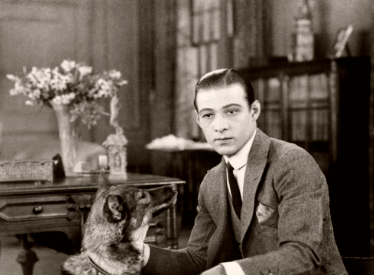
Douglas Fairbanks and Rudolph Valentino were the decade’s two great male icons — but they represented opposite visions of masculinity.
Douglas Fairbanks: The Athletic Hero
Fairbanks embodied physicality. He was tanned, muscular and perpetually in motion. His beauty was rooted in:
- outdoor vitality
- athleticism
- natural skin
- minimal grooming
- swashbuckling charisma
He represented the traditional American ideal: strong, active, sun‑lit.
Rudolph Valentino: The Sensual Idol
Valentino was the counterpoint — the romantic, groomed, shadow‑lit star. His beauty was built on:
- sculpted features
- glossy hair
- expressive eyes
- fragrance
- controlled posture
- Mediterranean softness
He represented a new ideal: sensual, emotional, cinematic.
Why Their Contrast Mattered
Fairbanks appealed to the old world.
Valentino defined the new one.
Together, they expanded the definition of male beauty. Fairbanks proved masculinity could be athletic and joyful. Valentino proved it could be groomed, expressive and intimate.
Their duality shaped the future of male stardom — from Cary Grant to Alain Delon to modern leading men.
I’m Stacey Hobbs, thanks for reading Face by Stace! Until next time.
do you feel fabulous today?

