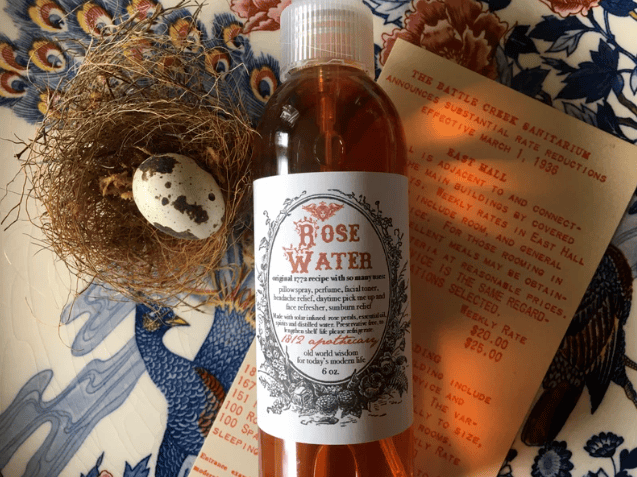
In the 1930s, rosewater was one of the essentials of a woman’s vanity. Long before toners that we know today existed, rosewater served as a gentle complexion refresher, a soft, floral rinse that balanced the skin and prepared it for powder, rouge and the decade’s signature luminous finish. It was prized for its simplicity: calming and accessible even during leaner economic years.
Women applied rosewater after cleansing to soften the skin and reduce any lingering redness. Its naturally soothing properties made it ideal for the era’s beauty routines, which relied heavily on cold creams, soap cleansing and early forms of liquid foundation. A quick sweep of rosewater helped restore comfort and left the complexion feeling cool and refined.
Rosewater also fit seamlessly into the 1930s aesthetic. The decade favoured a delicate, candlelit complexion — smooth, even and subtly radiant. Using rosewater as a toner created the perfect base for cream rouge and finely milled powder, allowing makeup to glide on with that un-mistakable Old Hollywood softness.
Today, rosewater remains one of the most timeless skincare staples. When used as a toner, it echoes the elegance of 1930s beauty: simple, gentle, and quietly luxurious. A single ingredient that has endured nearly a century of changing trends — proof that some rituals never lose their charm.
I’m Stacey Hobbs, thanks for reading Face by Stace! Until next time.
do you feel fabulous today?

