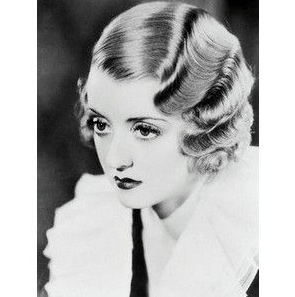
Marcel waves and finger waves defined 1930s glamour but they weren’t the same technique. Both created the decade’s iconic S‑shaped curves, yet each had its own method, texture and cultural moment.
Marcel waves came first, invented in the late 19th century by French hairdresser François Marcel. By the 1920s and early ’30s, the technique was a salon staple. Marcel waves were created using heated metal tongs, clamped rhythmically along the hair to form deep, structured ridges. The result was glossy, sculpted waves with a slightly rigid finish — the kind of polished glamour seen on early Hollywood stars and in formal portraits. Marcel waves required skill, heat and precision, making them a professional service more than a home ritual.
Finger waves, by contrast, were the accessible, at‑home version of the look. Popular throughout the 1930s, they were created without heat: just fingers, a comb and setting lotion. Women shaped the hair into S‑curves by pushing and pinching sections into place, securing them with clips until dry. Finger waves were softer, more fluid and slightly more natural than Marcel waves. They became the everyday wave — achievable in bedrooms, dormitories and beauty parlors without special tools.
In essence, Marcel waves were structured, heated, and professional, while finger waves were soft, cool‑set and accessible. Together, they defined the decade’s romantic, sculpted hairstyles and remain two of the most iconic techniques in vintage beauty history.
I’m Stacey Hobbs, thanks for reading Face by Stace! Until next time.
do you feel fabulous today?

