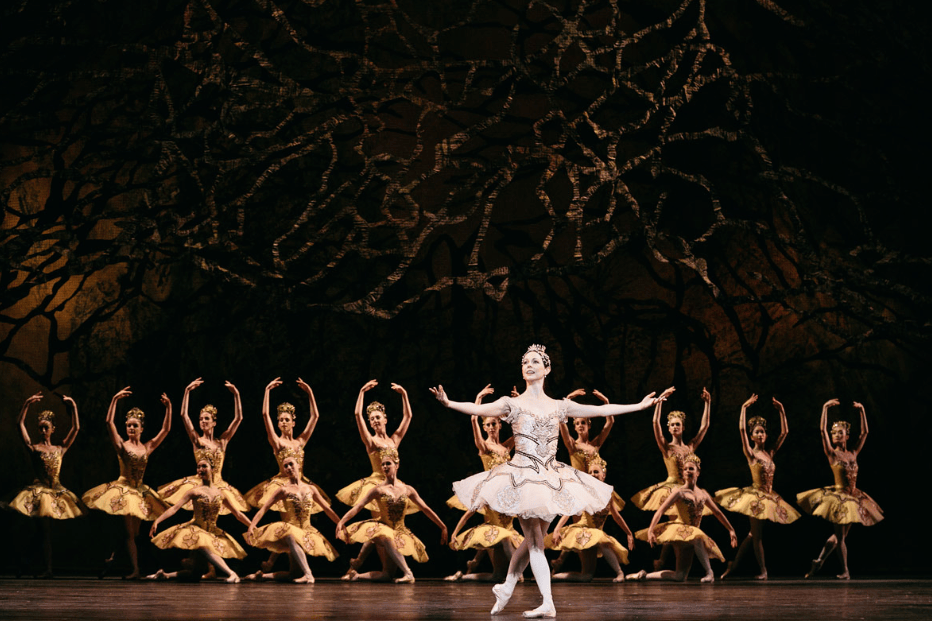
Ballet has always been one of the world’s most enduring beauty looks had developed from a place where movement becomes emotion, costume becomes character and storytelling becomes visual poetry. It is an art form built on discipline and delicacy, strength and softness, history and imagination. For me, ballet has shaped how I understand elegance: not as perfection, but as the quiet power of intention, posture, and emotional expression.
This series explores four ballets that have defined cultural beauty across centuries — each one offering its own aesthetic vocabulary, emotional landscape, and historical significance. From the tragic romance of Romeo & Juliet, to the avant‑garde psychological intensity of Nijinsky, to the ghostly heartbreak of Giselle, and the classical perfection of Sleeping Beauty, these works reveal how ballet continues to influence fashion, beauty, and storytelling today.
Each ballet in this series is more than performance — it is a study in beauty, identity, and the emotional architecture of movement. Through expanded historical context and beauty‑focused interpretation, this collection invites readers to experience ballet not only as art, but as a cultural mirror reflecting the aesthetics of its era and the timeless elegance that continues to inspire us.
Romeo & Juliet (Prokofiev): Tragic Romance & Renaissance Beauty

A ballet where love and fate collide, Romeo & Juliet blends Shakespearean tragedy with Prokofiev’s sweeping score. Its Renaissance vibe — braided hair, soft fabrics, youthful silhouettes — creates a visual language of innocence, passion and doomed beauty. It is romance expressed through movement and beauty expressed through emotion.
Historical Context
- Based on Shakespeare’s 1597 play
- Choreographed by Leonid Lavrovsky
- Prokofiev’s score is considered one of ballet’s greatest achievements
Beauty + Fashion Influence
- Renaissance silhouettes: corseted bodices, flowing sleeves, braided hair
- Juliet’s innocence expressed through soft make-up and pale fabrics
- Romeo’s youthful masculinity reflected in earthy tones and athletic movement
Romeo & Juliet shaped the visual language of tragic romance — beauty intertwined with fate.
Nijinsky: Modernism, Avant‑Garde Movement, Psychological Beauty

Nijinsky shattered classical ballet conventions introducing angularity, tension and emotional rawness. His work marked the birth of modernism in dance — beauty that confronts rather than comforts. Through bold shapes, psychological depth and avant‑garde choreography, Nijinsky redefined what beauty could be: un-settling, expressive and revolutionary.
Historical Context
- Early 20th century
- Ballets Russes era
- Works include The Rite of Spring and Afternoon of a Faun
Beauty + Fashion Influence
- Modernist minimalism
- Sharp lines, geometric shapes
- Psychological expression through movement rather than costume
- The birth of “ugly beauty” — beauty that confronts rather than comforts
Nijinsky’s work is the foundation of contemporary ballet aesthetics.
Giselle: Innocence, Heartbreak, Ghostly Elegance

Giselle is the quintessential Romantic ballet — a story of love, betrayal, madness and forgiveness. Its beauty lies in contrast: the pastoral innocence of Act I and the ethereal, ghostly elegance of Act II. White tulle, moonlit palettes and delicate movement create a haunting aesthetic that has shaped ballet’s visual identity for nearly two centuries.
Historical Context
- Premiered in Paris
- Choreographed by Jean Coralli and Jules Perrot
- Music by Adolphe Adam
Beauty + Fashion Influence
- Act I: pastoral innocence — soft curls, floral crowns, airy dresses
- Act II: ghostly elegance — white tulle, ethereal makeup, moonlit palettes
- Giselle’s transformation from girl to spirit shaped the “Romantic ballerina” archetype
Giselle is beauty as emotion — fragile, haunting, un-forgettable.
Sleeping Beauty: Classical Perfection & Fairytale Beauty

A pinnacle of classical ballet, Sleeping Beauty is symmetry, precision and fairytale elegance refined to perfection. Aurora’s soft pink palette, the fairies’ pastel costumes and Petipa’s immaculate choreography form a world where beauty is discipline, grace and regal storytelling. It is ballet at its most technically exquisite.
Historical Context
- Sleeping Beauty was introduced in 1890
- Choreographed by Petipa
- Music by Tchaikovsky
- Considered one of ballet’s greatest technical masterpieces
Beauty + Fashion Influence
- Aurora’s pink palette → bridal and debutante beauty
- Fairy costumes → pastel couture and whimsical make-up
- The Rose Adagio → iconic hair and tiara styling
Sleeping Beauty is beauty as discipline — refined, regal, timeless.
A Series Rooted in Beauty & Culture
Each ballet in this collection reveals a different facet of beauty — romantic, modernist, ghostly, classical — and together they show how ballet continues to influence fashion, makeup, storytelling and cultural aesthetics today.
I’m Stacey Hobbs, thanks for reading Face by Stace! Until next time.
do you feel fabulous today?
 Face by Stace