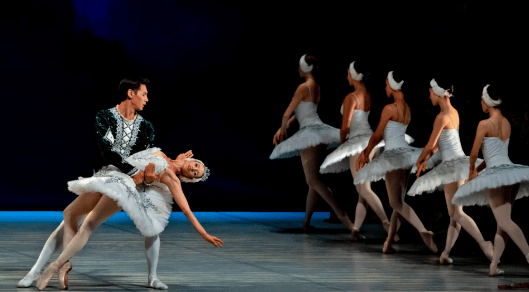
(Nutcracker, Cinderella, Swan Lake)
Ballet has shaped beauty and fashion for centuries. Its vibe — ethereal, disciplined, romantic — has influenced designers, makeup artists and cultural beauty ideals.
Ballet has always been one of my great loves — not just as an art form but as a language of beauty, discipline and storytelling. It is the place where movement becomes emotion, where costume becomes character and where beauty becomes narrative.
The Nutcracker: Holiday Elegance
Premiering in 1892 in St. Petersburg, The Nutcracker was originally considered a modest success — but in the 20th century, it became the most performed ballet in the world.
Historical Context
- Based on E.T.A. Hoffmann’s 1816 story The Nutcracker and the Mouse King.
- Tchaikovsky’s score revolutionized ballet music with its emotional clarity and festive charm.
- The ballet became a North American holiday tradition by the mid‑20th century.
Beauty + Fashion Influence
- The Sugar Plum Fairy’s shimmering palette inspired holiday make-up collections.
- Clara’s soft curls and ribboned hair became a winter beauty staple.
- Costumes influenced tulle skirts, pastel palettes and delicate embellishments.
Cinderella: Soft Glamour & Transformation
Long before Disney’s 1950 animated film, Cinderella existed as a European folk tale dating back to the 17th century. The ballet adaptation emerged in the 19th century, with notable versions choreographed by Marius Petipa and later by Frederick Ashton in 1948.
Historical Context
- The story’s earliest written version is by Charles Perrault (1697).
- Ballet adaptations emphasized transformation, femininity and moral beauty.
- Costuming traditionally used soft blues, silvers and shimmering fabrics to evoke magic and purity.
Beauty + Fashion Influence
- The “glass slipper” vibe inspired transparent shoes, crystal accessories and luminous make-up.
- Cinderella’s ball gown silhouette influenced couture evening wear for decades.
- Her transformation scene became a blueprint for “glow‑up” beauty narratives.
Cinderella’s look is timeless because it’s built on simplicity and radiance.
Swan Lake: Duality, Drama & Iconic Beauty
Premiering in 1877, Swan Lake is one of the most recognizable ballets in history. Its beauty lies in contrast — the White Swan (Odette) and the Black Swan (Odile).
Historical Context
- Composed by Tchaikovsky, choreographed by Petipa and Ivanov.
- The dual role became a test of a ballerina’s emotional and technical range.
- Swan Lake’s themes of purity, deception, and transformation shaped ballet’s dramatic identity.
Beauty + Fashion Influence
- White Swan → bridal couture, feathered accessories, soft glam.
- Black Swan → editorial smokey eyes, sleek buns, dramatic silhouettes.
- The ballet’s monochrome palette influenced runway minimalism.
Ballet is not just performance — it is a beauty language.
I must say I love the ballet. I enjoy all of these ballets and many more. Swan Lake is the first ballet I had ever watched and it is still favourite.. Romeo & Juliet may be one of my favourite ballets. Nijinsky is another ballet that is remarkable.
Future Ballet Post (Part II)
You can expand your ballet series with:
- Romeo & Juliet (Prokofiev) — tragic romance, Renaissance beauty
- Nijinsky — modernism, avant‑garde movement, psychological beauty
- Giselle — innocence, heartbreak, ghostly elegance
- La Bayadère — opulence, exoticism, historical costuming
- Sleeping Beauty — classical perfection, fairytale beauty codes
I’m Stacey Hobbs, thanks for reading Face by Stace! Until next time.
do you feel fabulous today?
 Face by Stace