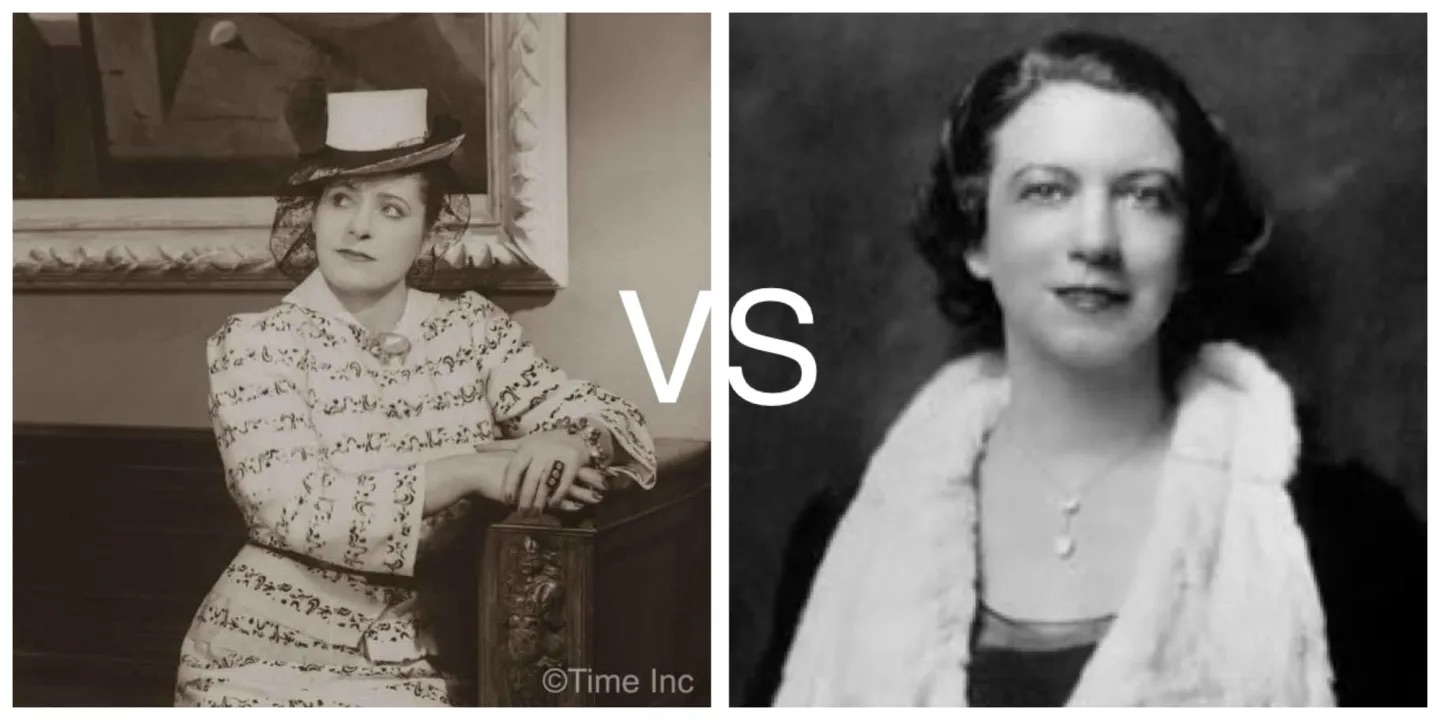
Elizabeth Arden and Helena Rubinstein didn’t simply create beauty brands — oh, no, these ladies did much more. They engineered ideologies. Their rivalry wasn’t petty; it was architectural. Each woman built a world, a philosophy, and a clientele that reflected her deepest beliefs about beauty, class and modern womanhood.
Arden believed beauty was a discipline. A ritual. A pathway to self‑improvement.
Her salons were brought order — white, serene and aspirational. She sold the idea that beauty could be taught, refined, and perfected through routine.
Rubinstein, meanwhile, believed beauty was science. A formula. A measurable transformation.
Her clinics were laboratories of innovation, filled with chemists, dermatologists and the earliest forms of cosmetic research. She sold the idea that beauty could be engineered.
Their philosophies collided in the marketplace but more importantly, they collided in the cultural imagination. Women were choosing both a face cream, as well as choosing a worldview. A new worldview, little did the ladies of this era had realized, they were entering into the modern world of beauty.
The War for Credibility
What made their rivalry legendary wasn’t just competition — it was the battle for legitimacy. Who do you think won the battle?
Rubinstein weaponized science.
She introduced words like hormone cream, anti‑ageing and cellular rejuvenation decades before they became mainstream. Her marketing was clinical, authoritative and often intimidating.
Arden weaponized aspiration.
Arden created the “Red Door” mystique — a sanctuary where beauty felt luxurious, feminine and emotionally transformative. Elizabeth Arden marketing was elegant, romantic and socially aspirational.
Both women understood something revolutionary:
Beauty wasn’t superficial — it was psychological.
Instead of selling products, they were promoting identity.
The First Modern Beauty Industry


Their rivalry forced the beauty industry to evolve. Before Arden and Rubinstein, cosmetics were fringe — associated with actresses, dancers, and the so-called “fast women.”
After them, beauty became respectable, scientific, aspirational, modern and mainstream.
They normalized skincare routines, salon culture and the idea that women could invest in themselves with confidence, as opposed to shame.
Their competition created:
- the first beauty marketing campaigns
- the first celebrity endorsements
- the first luxury beauty salons
- the first scientific skincare labs
- the first global beauty brands
They didn’t just shape the industry — they invented it.
The Personal War
Behind the scenes, their rivalry was deeply personal.
They refused to speak each other’s names.
They spied on each other’s product launches.
They poached employees.
They undercut prices.
They raced to out‑innovate each other.
Rubinstein once said Arden’s salons were “too emotional.” Arden’s said Rubinstein’s creams smelled “like medicine.”
Their disdain was mutual — and legendary.
But here’s the reality:
They needed each other.
Each lady sharpened the other.
Each lady pushed the other to innovate.
Each lady defined herself against the other’s philosophy.
Their rivalry is what ended up being the engine of their genius.
I’m Stacey Hobbs, thanks for reading Face by Stace! Until next time.
do you feel fabulous today?
 Face by Stace