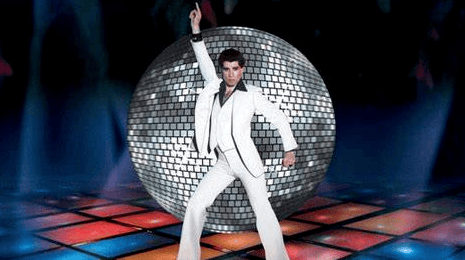
Saturday Night Fever entered into pop culture and into the fashion history, leaving a trail of white suits, gold chains and glossy swagger in its wake. When the film hit theatres in 1977, audiences weren’t just watching Tony Manero move — they were watching a new kind of man emerge: confident, sensual, and dressed like the night itself.
The movie didn’t invent disco style, it popularized it.
It turned nightclub fashion into mainstream aspiration.
It made getting dressed a ritual — a transformation — a performance.
And it changed how men and women approached fashion for decades.
The White Suit That Became a Cultural Monument
Designed by Patrizia Von Brandenstein, the Tony Manero’s white three‑piece suit wasn’t just clothing — it was a symbol. The crisp white fabric, the exaggerated lapels, the black shirt underneath, the gold chain glinting at the collar… it was disco distilled into a single silhouette.
The suit represented:
- Purity meeting nightlife
- Confidence meeting aspiration
- Masculinity meeting glamour
It was a declaration that men could be sensual, stylish, and expressive — not just rugged or understated. The suit became a monument because it captured the fantasy of disco: a world where you could reinvent yourself under the lights.
Today, designers still reference it.
Editorials still re-create it.
Costume departments still borrow it.
It remains one of the most recognizable outfits in film history.
The Birth of “Nightlife Dressing”
Before Saturday Night Fever, nightlife fashion existed — but it wasn’t mainstream. The film changed all of that. Suddenly, dressing for the night wasn’t just about going out; it was about becoming someone.
Tony’s ritual of getting ready — the hair, the shirt, the jewelry, the suit — created a template for nightlife dressing:
- Dressing became a transformation
- Clothing became performance
- Nightlife became identity
This was the birth of “nightlife dressing” as we know it today. The idea that what you wear after dark is a different version of you, bolder, freer, more glamorous, traces directly back to this film.
How Disco Fashion Liberated Men
One of the most overlooked impacts of Saturday Night Fever is how it liberated men’s fashion. The 1970s had already begun loosening the rules, but Tony Manero kicked the door open.
He wore:
- fitted shirts
- flared trousers
- platform shoes
- jewelry
- bold colours
- sensual silhouettes
This was radical. Men were suddenly allowed to be glamorous, expressive, body‑conscious, stylish, and ornamental.
The film gave men permission to care about fashion, openly, proudly, and without apology. It was a cultural reset that still influences menswear today, from Gucci’s maximalism to Saint Laurent’s disco‑slick tailoring.
The Feminine Side of Disco: Halters, Metallics, and Movement
While Tony’s suit became the icon, the women of Saturday Night Fever shaped the feminine side of disco fashion. The film showcased:
- halter tops
- metallic fabrics
- slinky dresses
- fluid silhouettes
- glossy lips
- shimmering eyeshadow
Disco fashion for women was about movement — clothing that caught the light, swayed with the music, and turned the dance floor into a stage. It was sensual while remaining classy, glamorous without being stiff. It celebrated the body, the rhythm, and the freedom of nightlife.
This aesthetic still appears in modern fashion cycles: every time designers revive metallics, halters, or fluid eveningwear, they’re tapping into disco’s legacy.
Why Saturday Night Fever Still Influences Fashion Today
The film’s fashion impact endures because it wasn’t just about clothes, it was about identity. It taught us that dressing up is a ritual, a transformation, a way of stepping into a more confident version of ourselves.
Its influence lives on in:
- modern menswear tailoring
- nightlife fashion
- capsule collections inspired by 1970s glamour
- editorial styling
- music‑driven fashion campaigns
- runway revivals of disco aesthetics
Every time a designer sends a white suit down the runway, every time a fashion editorial channels disco lighting, every time nightlife dressing becomes a cultural conversation, it is all thanks to Saturday Night Fever.
It wasn’t just a movie.
It was a fashion revolution.
And its dance floor is still spinning.
I’m Stacey Hobbs, thanks for reading. Until next time!
do you feel fabulous today?
 Face by Stace