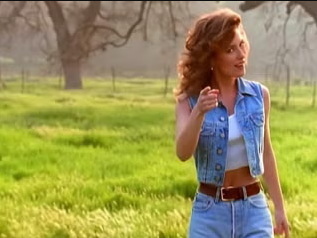

Shania Twain didn’t simply enter country music, she actually re-engineered it with her fashion/style choices. Before her rise, the genre’s fashion identity leaned heavily on tradition: denim, fringe, boots and overall the entire country music look rooted in Americana. Shania disrupted that framework with a modern, glamorous and un-apologetically feminine approach that re-shaped the industry’s relationship with image. Shania wrote her own rules, not just with her version of country music, but also with her style.
Her midriff became a cultural pivot point. It wasn’t just a styling choice — it was a statement of autonomy. Shania introduced a new appearance to country music: sleek, athletic, confident, and contemporary. She blended pop glamour with country heritage, creating a hybrid apparel that felt both rebellious and aspirational.
Little did the country music scene realize, it was in need of a country singer to switch things up, for this singer to bring a fresh take on country music and fashion. Enter Shania Twain. The most sold-out female country singer, primarily with her album, Come on Over, according to the Guinness World Records.
The Midriff Revolution
Shania’s midriff was more than a trend; it was a visual thesis. It represented:
- Female agency in a genre historically shaped by male narratives
- Modernity in a space that often resisted change
- Confidence expressed through fashion rather than performance alone
- A new standard of stage presence that merged athleticism with glamour
Her styling choices told audiences that country women could be bold, glamorous, and self‑defined, without sacrificing authenticity.
The Glamour Shift
Shania’s wardrobe introduced elements rarely seen in country music at the time:
- Metallic fabrics
- Leopard print
- Structured crop tops
- High‑waisted trousers
- Sleek ponytails and polished glam
- Pop‑influenced silhouettes
She brought couture energy into a genre that had long relied on rustic motifs. This shift didn’t alienate country audiences — it expanded them. Her aesthetic made country music feel modern, international, and culturally relevant.
The Music Video Era
Shania’s videos became fashion landmarks. Man! I Feel Like a Woman!That Don’t Impress Me Much You’re Still the One.

Each visual era introduced a new facet of her identity:
- The white shirt + black mini skirtbecame a global symbol of female empowerment.
- The leopard print catsuit became a pop‑culture icon.
- The sleek, romantic beach stylingin You’re Still the One defined 1990s soft glamour.
She used fashion as a narrative, with each look, it told a story about independence, desire, confidence, or transformation.
Cultural Impact
Shania’s fashion evolution re-shaped:
- Country music’s relationship with femininity
- The visual expectations for female performers
- The crossover between country and pop aesthetics
- The global perception of Canadian artistry
- The rise of “country glamour” as a mainstream style
Her influence is still visible today in artists who blend genres and aesthetics — from Carrie Underwood to Kelsea Ballerini to Taylor Swift’s early career.
The Legacy
Shania Twain didn’t just modernize country fashion — she liberated it. She proved that glamour and authenticity can co-exist. She showed that femininity can be powerful, athletic, and self‑authored. She created a an appearance that made country music feel expansive, contemporary, and culturally resonant.
Her midriff wasn’t a trend.
It was a revolution.
I’m Stacey Hobbs, thanks for reading Face by Stace! Until next time.
do you feel fabulous today?
 Face by Stace