The Rebel vs. the Revival
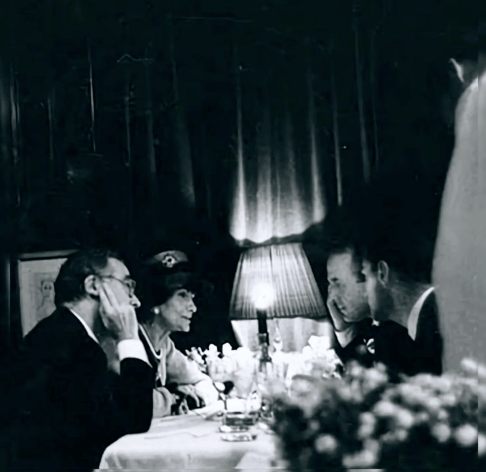
Coco Chanel returned to fashion in 1954with fire in her voice and opinions sharper than her scissors. She had watched postwar couture from the sidelines andshe didn’t like what she saw, especially from Dior and the houses that embraced his voluptuous silhouettes.

To Chanel, the New Look was a betrayal. She believed women had earned freedom during the war — freedom of movement, freedom from corsets, freedom from excess. Dior’s cinched waists and padded hips felt to her like a regression. She famously declared, “Dior doesn’t dress women. He upholsters them.”
Her critiques extended beyond Dior. She viewed the entire postwar couture revival as overly decorative, overly structured, and out of touch with modern life. Chanel championed simplicity, ease, and practicality. She wanted women to feel un-encumbered, not sculpted.
Her philosophy stood in stark contrast to the architectural rigor of Balenciaga and the romanticism of Dior. Chanel wasn’t interested in silhouettes that transformed the body; she wanted clothes that liberated it. Her critiques weren’t petty; they were ideological. She believed fashion should serve women, instead of it being the other way around.
In the landscape of postwar couture, Chanel was the rebel, the dissenter, the voice insisting that elegance could be simple. Her critiques sharpen the contrast between her vision and the grand, sculptural ambitions of her contemporaries.
Dior vs. Balenciaga vs. Chanel:
Three Visions of Femininity
The Romantic, the Architect, and the Liberator
Mid‑century couture was not defined by a single vision of femininity, which was shaped by three radically different philosophies embodied by Dior, Balenciaga, and Chanel. Together, they created the tension that made the era so electrifying.
Christian Dior — The Romantic
Dior believed in beauty as emotion. His silhouettes celebrated curves, softness, and a return to opulence after wartime austerity. The New Look was style, however the New Look was much more than style; it was a cultural shift, a sigh of relief, restoring woman to femininity after the war, that woman and the fashion world embraced. Dior’s femininity was lush, blooming, and deeply nostalgic — a romantic dream brought to life in silk and taffeta.
Cristóbal Balenciaga — The Architect
Balenciaga approached femininity as form. He sculpted the body with volume, structure, and purity of line. His designs didn’t follow the body; they re-defined it. His femininity was modern, abstract, and architectural — a vision of womanhood elevated to art.
Coco Chanel — The Liberator
Chanel rejected both romance and architecture. Her femininity was rooted in freedom. Freedom of movement, freedom from constraint, freedom from artifice. She believed elegance should be effortless. Her vision was pragmatic, modern, and fiercely independent.
Three Visions, One Era
- Dior made women feel beautiful.
- Balenciaga made women look sculptural.
- Chanel made women feel liberated.
Their philosophies collided and co-existed, shaping the Golden Age of couture. To understand any one of them, you must see them in relation to the others — three designers, three visions, one extraordinary moment in fashion history.
 Face by Stace