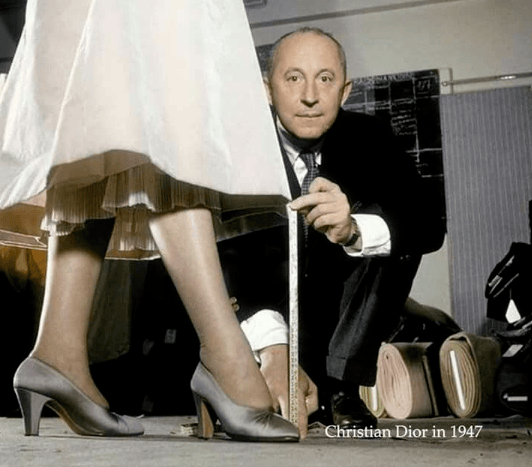
Christian Dior’s death on October 24, 1957, struck the fashion world with the force of an earthquake. One moment, he was the reigning monarch of post-war couture — the man who had rebuilt Parisian fashion from ashes and restored beauty to a world still healing from war. The next, the House of Dior was suddenly, devastatingly, without its founder.
Dior died of a heart attack while vacationing in Italy. He was only the young age of 52.
News travelled quickly and the reaction was immediate: editors mourned, clients panicked and the entire industry froze. Dior was more than just a designer — he was a global institution, a symbol of French elegance, and the architect of the New Look that had re-shaped women’s fashion a decade earlier. His absence created a void no one believed could be filled.
Inside the house, the shock was even more profound. Dior had been a gentle, paternal presence; meticulous, soft‑spoken and deeply protective of his atelier. His sudden death left his team grieving and directionless, un-sure of what the future could look like without the man who had built everything.
And then came the decision that would change fashion history:
The appointment of a shy, 21‑year‑old assistant named Yves Saint Laurent as artistic director.
Dior’s death was a tragedy.
But it also marked the beginning of one of the most extraordinary transitions in couture; a passing of the torch that would define the next era of the house.
Christian Dior left behind a legacy of beauty, structure and romance.
His influence didn’t end in 1957.
It simply transformed.
I’m Stacey Hobbs, thanks for reading! Until next time.
do you feel fabulous today?
 Face by Stace