How Two MCs, One DJ Turned a Sneaker Into a Global Icon
Got your shell‑toe, no‑lace Adidas? Let’s go!

Before luxury houses were chasing streetwear collaborations, before sneakers became status symbols, before hip‑hop was a marketing category, there was Run‑DMC, and there were Adidas Superstars. What began as a personal style choice became one of the most influential fashion partnerships in music history, re-shaping not only hip‑hop fashion, but the entire relationship between artists and brands.
In the early 1980s, Run‑DMC stepped onto stages in Queens wearing something radically different from the sequined, flashy costumes dominating rap at the time: Adidas tracksuits, unlaced Superstars, and Kangol hats. Their look wasn’t styled by a label — it was pulled straight from the streets. The Adidas Superstar, originally a basketball shoe, became their signature choice of shoe they’d sport. The un-laced style came from prison culture, where laces were removed for safety, and Run‑DMC transformed it into a bold, rebellious fashion statement.
They didn’t follow fashion — they became fashion.
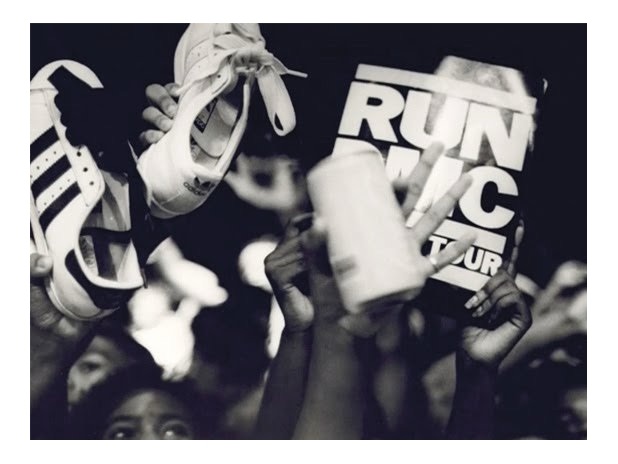
Everything changed in 1986 with “My Adidas.” The song wasn’t a paid endorsement, but instead, the song was dedicated to their love of sneaker that represented their identity, their community, and their authenticity. When they performed it at Madison Square Garden, they asked the crowd to hold up their Adidas. Thousands of fans lifted their sneakers into the air. It was a cultural earthquake kind of moment.
Adidas executives were in the audience.
They had never seen anything like it.
Within weeks, Run‑DMC signed a $1.6 million endorsement deal — the first major partnership between a hip‑hop group and a global sportswear brand. It legitimized hip‑hop as a commercial force and proved that artists could shape fashion from the ground up, not the other way around.
Run‑DMC didn’t just wear Adidas —
they made Adidas iconic.
The impact was incredibly un-deniable. Run‑DMC made Adidas cool. They turned the Superstar into a global icon, sparked the rise of sneaker culture, and paved the way for every artist‑brand collaboration that followed: Jay‑Z x Reebok, Kanye x Adidas, Rihanna x Puma, Beyoncé x Ivy Park, Travis Scott x Nike.
Their partnership wasn’t about marketing. It was about identity, authenticity, and the power of culture to move markets.
Run‑DMC didn’t just change fashion.
They changed the business of fashion.
I’m Stacey Hobbs, thanks for reading! Until next time.
do you feel fabulous today?
 Face by Stace