Not a product but a technique.
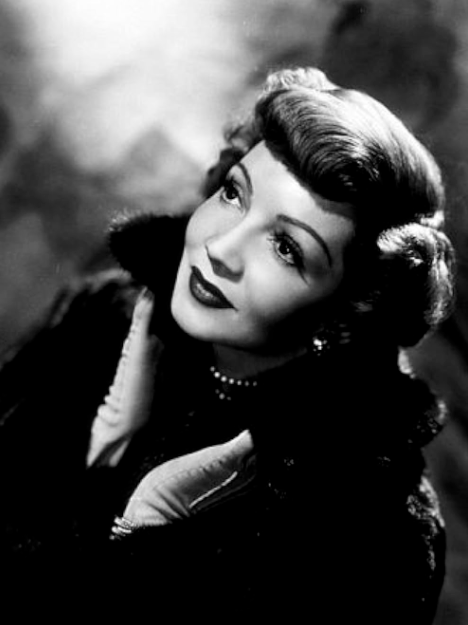
Colbert insisted on being filmed from her left side only, believing it was more flattering. She even had lighting instructions written into her contracts.
In an era when studio lighting could make or break an actor, Claudette Colbert had learned and later mastered something few actresses dared to demand, which was complete control over how she was lit. Her now‑legendary “one‑side lighting” rule wasn’t vanity as many people suspect, it was strategy. And it became one of the most influential beauty techniques of the 1930s.
Colbert understood her face the way a sculptor understands marble. She knew her angles, her symmetry and the exact lighting that made her look luminous on camera. And she protected that knowledge fiercely.

The Rule That Made Her Iconic
Colbert insisted on being filmed and photographed from her left side only. The side she believed was more refined, more balanced and more expressive. She was so committed to this technique that she had the requirement written directly into her contracts.
But the real magic wasn’t the angle. It was all about how the lighting was placed on Colbert during filming of her films.
Colbert preferred a soft, controlled key light placed to flatter her cheekbone, lift her jawline and to smooth the delicate planes of her face. The result was a signature glow, a crisp, elegant, which was un-mistakably hers.
Why This Trick Worked (and Still Does)
Colbert’s technique was rooted in classic portrait principles:
- Directional light sculpts the face.
- Shadow placement defines bone structure.
- Controlled highlights create lift.
- Consistency ensures the star always looks like the star.
She wasn’t just choosing a “good side.” She was choosing the right light and using it as a beauty tool, as well.
This is why her close‑ups remain some of the most flattering in 1930s cinema.
A Technique Hair & Make‑Up Pros Still Use Today
Colbert’s trick is essentially the foundation of modern beauty lighting.
Her approach predicted:
- the glamour key light.
- the soft‑box beauty setup.
- the one‑direction fill.
- the “hero side” concept used in editorial shoots.
- the controlled shadow mapping used in contouring.
Make‑up artists know: light is the final product.
Hair stylists know: light determines texture and shine.
Fashion stylists/dressers know: light decides whether fabric reads expensive or flat.
Colbert understood all of this instinctively.

One of her most popular films is It Happened One Night (1934), s screwball comedy, a romantic comedy (one of my favourite movies and of this genre) starring Clark Gable, directed by Frank Capra, with a couple popular scenes, one of which is what made coffee a popular breakfast beverage thanks to Clark Gable’s character and another popular scene of how Claudette Colbert’s character was able to hitch a ride in the film and this is the only starring role where she had won an Academy Award (Oscar) for her co-starring role as Ellie Andrews, Clark Gable won his Academy Award for Best Actor and Frank Capra won an Academy Award for Best Director. The first film to win the Big Five in all major Academy Award categories.

I’m Stacey Hobbs, thanks for reading. Until next time!
do you feel fabulous today?
 Face by Stace