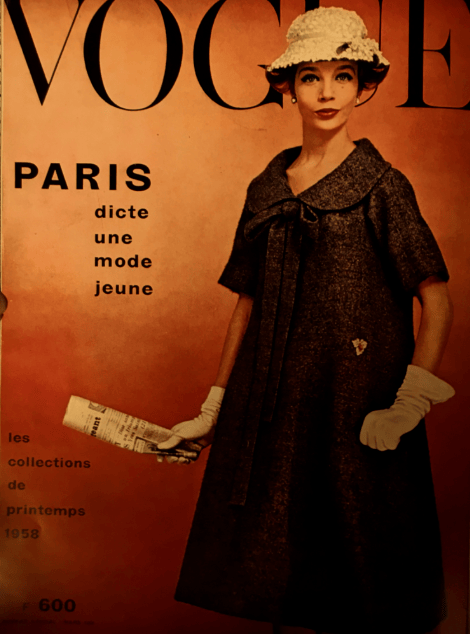
When Yves Saint Laurent stepped into the role of creative director at Dior in 1957, he was a young twenty‑one-year-old, an age when most young men were still figuring out who they were. YSL didn’t have that luxury. Overnight, he inherited the most powerful couture house in the world, the legacy of Christian Dior, and the expectations of an entire nation still re-building its identity after the war.
And somehow, impossibly, he rose to the moment.
Paris held its breath as the young designer prepared his first collection. Critics whispered. Clients doubted. Rivals sharpened their knives. How could a boy, Dior’s quiet, fragile protégé, possibly carry the weight of a house that had re-shaped fashion itself?
Then came the Trapeze Line.
Soft, swinging silhouettes. A release from the cinched waist. A new kind of femininity — light, modern, liberated.
It wasn’t just a success. It was a sensation.
The collection revived the house, restored confidence in French couture and proved that Dior’s prophecy had been right all along:
Yves Saint Laurent was the future.
For the next three years, YSL brought a fresh, youthful energy to Dior. His designs were elegant but daring, refined but forward‑looking. He understood the changing world, the rise of youth culture, the shift toward modernity and he translated it into couture with a sensitivity far beyond his age.
But brilliance came with a cost, Yves Saint Laurent would discover and learn.
The pressure was relentless. The expectations were suffocating. Every collection was a test, every review a referendum on whether the boy could truly replace his mentor. And while Yves Saint Laurent delivered beauty season after season, the strain began to show.
Still, in those brief, incandescent years, Yves Saint Laurent didn’t just keep Dior alive. He kept French couture relevant.
He was the boy who saved the fashion house and by doing so, he ultimately saved an era of fashion.

I’m Stacey Hobbs, thanks for reading. Until next time!
do you feel fabulous today?
 Face by Stace