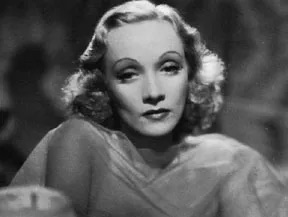
Marlene Dietrich didn’t just understand beauty, she understood how beauty behaves under light. Her collaboration with cinematographer Lee Garmes in the early 1930s produced one of Hollywood’s most influential visual innovations: the “Dietrich light.” This wasn’t merely flattering illumination; it was a sculptural technique that transformed Dietrich’s face into an icon of cinematic glamour.
The Dietrich light relied on a high, focused key light aimed directly at her face, paired with carefully controlled shadows. This setup sharpened her cheekbones, intensified her eye sparkle and created a halo‑like glow that became instantly recognizable. Dietrich insisted on precision: the beam had to hit at the exact angle that carved her bone structure into dramatic planes. Makeup and lighting worked together—her razor‑sharp contouring amplified the shadows, while highlights caught the beam and made her skin appear luminous.
Directors quickly learned that Dietrich wasn’t being demanding; she was being visionary. She understood that lighting could shape character, mood and myth. Under the Dietrich light, she became enigmatic, sculptural and almost otherworldly—a look that defined her persona across decades.
The technique became so influential that cinematographers began teaching it as a standard lighting method. Even today, beauty photographers and filmmakers reference Dietrich’s setup when creating high‑glamour portraits.
The Dietrich light wasn’t just a technical innovation. It was a collaboration between an actress who understood her own face and a cinematographer who understood how to immortalize it. Together, they created glamour that still shapes beauty culture nearly a century later.
I’m Stacey Hobbs, thanks for reading Face by Stace! Until next time.
do you feel fabulous today?


One thought on “Marlene Dietrich and the Birth of the “Dietrich Light”: Hollywood’s Most Iconic Illumination”