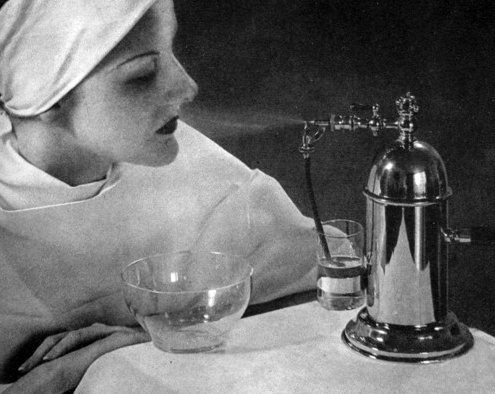
Early facial steamers of the 1910s–1930s were among the first beauty devices designed specifically for skin health rather than makeup application. Before this innovation, women relied on bowls of hot water, herbal infusions or warm cloths to soften the skin and open pores. The arrival of mechanical steamers transformed this simple ritual into a scientific treatment, merging dermatology, hygiene and beauty culture into a single, elegant machine.
A true early facial steamer consisted of a metal or glass chamber that heated water to produce a controlled stream of vapor. Some models used electric heating elements, while others relied on spirit lamps or small burners. The steam was directed through a narrow spout or funnel, allowing women to position their face at the ideal distance for pore cleansing. Advertisements promised clearer skin, improved circulation and a “velvety complexion” — benefits that aligned perfectly with the era’s fascination with purity and refinement.
These devices were used in both professional salons and private homes. Beauty operators incorporated steamers into facial treatments alongside cold cream massages, vibratory massagers and early electrical therapies. At home, women followed instructional pamphlets that guided them through steaming sessions, often performed at their vanity table before applying powder or rouge. The experience was both practical and indulgent, offering a moment of warmth, relaxation and self‑care.
Early facial steamers laid the foundation for modern skincare technology. They introduced the concept of controlled heat therapy, paved the way for electric humidifiers and spa steamers, and helped establish the idea that beauty could be enhanced through scientific methods. In the evolution of beauty tools, the facial steamer stands as one of the earliest devices dedicated to skin wellness.
I’m Stacey Hobbs, thanks for reading Face by Stace! Until next time.
do you feel fabulous today?

