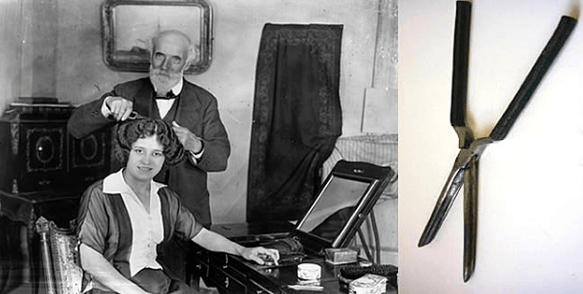
The first flat iron emerged in the early 20th century as one of the most daring and transformative beauty tools ever introduced. Before its invention, women relied on heated combs, stove‑top irons and improvised metal tools to smooth and shape the hair — methods that were inconsistent, risky, and often damaging. The arrival of the true flat iron marked a turning point: hair styling became more controlled, more technical, and more aligned with the sleek, sculpted aesthetics of the modern woman.
Early flat irons were entirely metal, typically crafted from steel with long handles and two smooth plates that clamped the hair between them. These irons were heated on a stove or over a flame, requiring skill and intuition to reach the right temperature. Too cool and the hair wouldn’t smooth; too hot, and it could scorch instantly. Stylists often kept multiple irons heating at once, rotating them rapidly to maintain the perfect working heat, which was a technique borrowed from the era’s Marcel wave irons.
The first flat irons were used to create the glossy, controlled styles seen on silent‑film actresses and fashionable socialites. They allowed women to tame frizz, refine finger waves and achieve the sleek bobs that defined 1920s glamour. Though primitive by today’s standards, these irons introduced the concept of heat‑based hair engineering, laying the foundation for every straightener, smoothing iron and heat‑styling tool that followed.
In beauty‑technology history, the first flat iron stands as a symbol of precision, innovation and the evolving relationship between women and their hair — a moment when styling became both scientific and expressive.
I’m Stacey Hobbs, thanks for reading Face by Stace! Until next time.
do you feel fabulous today?

