The 1928–1929 Stickel patent is the moment the eyelash curler became a true beauty technology — engineered, standardized, and ready for mass adoption. Before this patent, lash curlers existed in scattered forms: heated metal clamps, early Kurlash models, and experimental devices that varied wildly in shape and safety. The Stickel design changed everything. It introduced the precise geometry, hinge mechanics, and ergonomic structure that define the modern eyelash curler used by millions today.
The patent drawing reveals the brilliance of early cosmetic engineering. Figure 1 establishes the curler’s full form: two looped handles, a central hinge, and a curved clamping surface designed to follow the natural arc of the eye. Figures 2 and 3 show the device in use, demonstrating how the lash pad aligns perfectly with the eyelid — a revolutionary detail that ensured comfort and accuracy. Figure 5 highlights the curvature of the pad itself, the foundation of the “universal curl” shape still used in contemporary curlers.
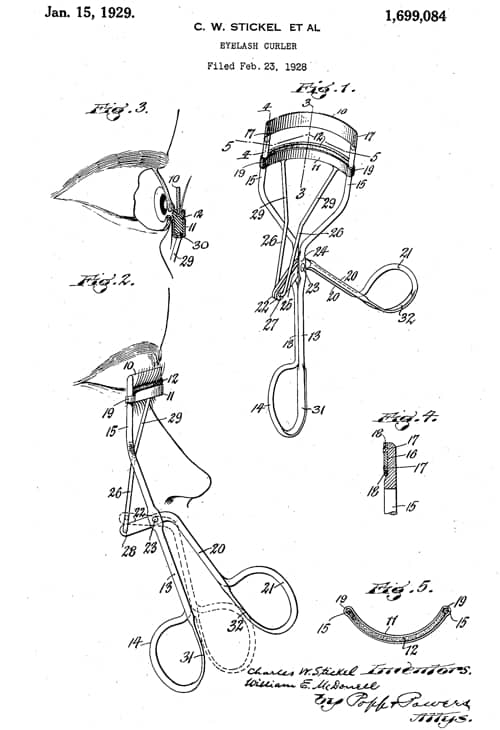
This patent also introduced the concept of replaceable pads, a feature that transformed lash curling from a risky, heated process into a safe, pressure‑based technique. By eliminating heat and standardizing the clamp’s curvature, Stickel created a tool that could be used daily, sold widely, and manufactured consistently.
Every modern curler — from Shu Uemura to Shiseido to Tweezerman — traces its lineage directly to this patent. It is the blueprint of the beauty industry’s most enduring tool, a perfect example of how engineering and aesthetics merged to create a timeless icon.
I’m Stacey Hobbs, thanks for reading Face by Stace! Until next time.
do you feel fabulous today?

