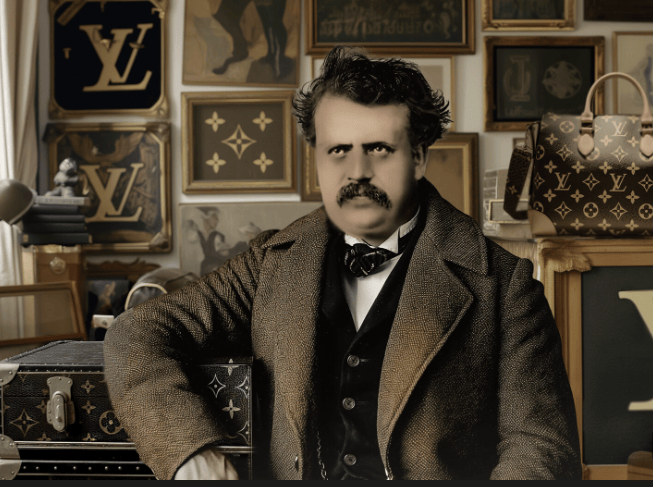
Louis Vuitton began not as a fashion house, but as a revolution in mobility. In 1854, Vuitton understood something no one else had: modern life would be defined by movement. Travel was becoming faster, grander, and more global — and it needed an elegance, style and luxury and so, Vuitton built it.
His innovation was the flat‑topped trunk, engineered to stack efficiently in train cars and steamships. It was practical, yet beautifully crafted, signalling a new kind of luxury: elegance through function. Vuitton’s trunks were architectural objects — disciplined lines, reinforced corners, and materials chosen for durability and prestige. They became symbols of modern sophistication.
The Monogram Canvas, introduced by his son Georges in 1896, transformed Vuitton from a maker of trunks into the world’s first luxury brand. The monogram wasn’t decoration; it was identity. It protected against counterfeits, created instant recognition, and established the idea that a logo could carry cultural power. Vuitton pioneered luxury branding decades before fashion houses embraced it.
As travel evolved, so did the house. Suitcases, hat boxes, vanity cases, and soft luggage reflected changing lifestyles. Vuitton’s craftsmanship remained constant: hand‑finished details, disciplined construction, and materials engineered for endurance. The brand’s DNA — mobility, modernity, and prestige — shaped the future of luxury design.
Louis Vuitton didn’t just make luggage. He created the visual language of travel — and the guideline for modern luxury branding.
I’m Stacey Hobbs, thanks for reading Face by Stace! Until next time.
do you feel fabulous today?

