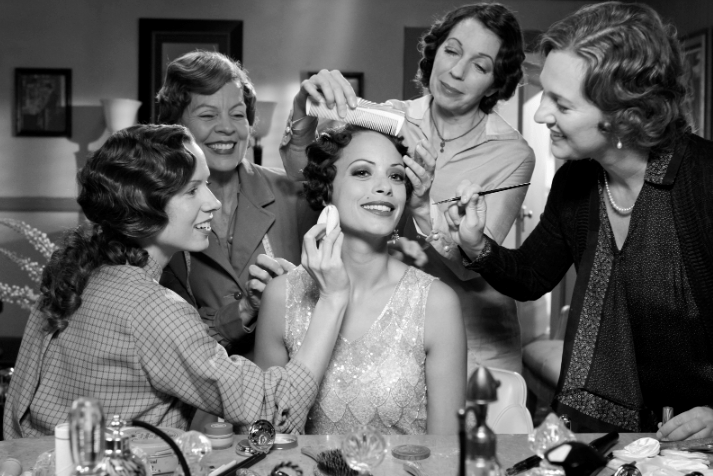
The bob may be the defining haircut of the 1920s, but the Canadian bob had its own personality — softer, wavier and more “proper” than its American counterpart. While American flappers embraced sharp, dramatic cuts that signalled rebellion, Canadian women adopted the bob with a gentler touch, shaped by British restraint, climate and cultural expectations.
In Canada, the bob rarely appeared as a blunt, geometric chop. Instead, it was styled with Marcel waves, finger waves and carefully set curls that framed the face. This created a look that felt modern but still feminine — a compromise between embracing the new era and maintaining social respectability. Canadian women wanted the freedom of short hair, but not the shock value.
Climate played a role too. Harsh winters demanded practicality: hair needed structure, hold, and styles that could survive hats, snow, and cold winds. Waves and curls provided durability that a straight, razor‑sharp bob simply couldn’t.
Beauty culture reinforced this softness. Canadian department stores promoted “refined” modernity, encouraging women to adopt trends without appearing too bold. Salon advertisements emphasized elegance, not rebellion. Even early beauty influencers — actresses, singers and socialites — wore bobs that were waved, curled, and impeccably groomed.
The result was a distinctly Canadian version of the iconic 1920s haircut: modern, but polite; fashionable, but controlled; daring, but never too daring. A bob that captured the spirit of the Jazz Age while staying true to Canada’s cultural identity.
I’m Stacey Hobbs, thanks for reading Face by Stace! Until next time.
do you feel fabulous today?

