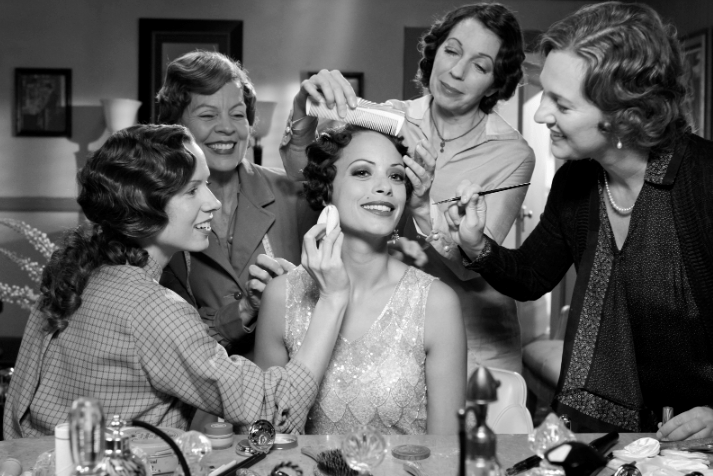
Canadian flappers faced a challenge: Winter. Real Winter. Snowbanks, icy sidewalks, freezing winds and months of cold that demanded practicality — even in the most modern decade of the Jazz Age.
This climate shaped the Canadian flapper look in ways that made it instantly recognizable.
Hemlines rose in the 1920s, but Canadian flappers often balanced shorter dresses with heavier coats, fur collars, wool capes and thick stockings. Evening wear was glamorous, but layered: silk dresses paired with long coats, wraps and gloves to survive the walk to the dance hall.
Footwear differed too. While American flappers wore delicate T‑strap heels year‑round, Canadian flappers switched between stylish shoes indoors and practical boots outdoors. Many carried their dancing shoes in small bags, changing once inside.
Hair also adapted to the climate. The Canadian bob was waved and curled not just for style, but for durability. Structured waves held better under hats, snow and humidity. Finger waves survived Winter winds far more gracefully than a sharp, straight bob.
Makeup stayed subtle partly because cold weather demanded powdered, matte skin to avoid shine from Winter dryness. Rouge and lipstick were worn, but carefully — bold makeup could look harsh against pale Winter light.
Winter didn’t limit Canadian flapper style. It refined it — creating a look that blended modernity with practicality, glamour with survival and Jazz Age energy with unmistakably Canadian resilience.
I’m Stacey Hobbs, thanks for reading Face by Stace! Until next time.
do you feel fabulous today?

