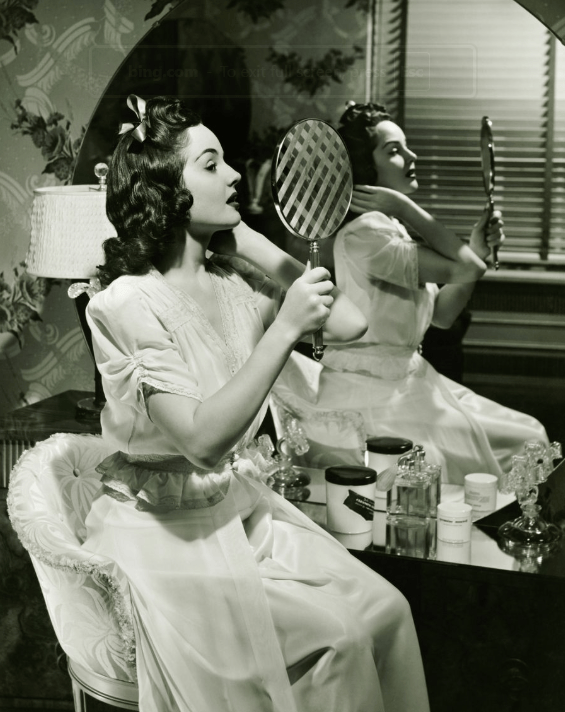
In 1930s Canada, beauty and fashion weren’t defined by excess — they were defined by endurance. The Great Depression re-shaped Canadian style into something practical, resilient and elegant. Durability wasn’t just a necessity; it became a vibe.
Canadian women relied on fabrics that could survive long winters, repeated wear and constant repair. Wool, tweed, knits and sturdy cotton dominated wardrobes. Dresses were chosen for longevity, not novelty. Coats were investments, often worn for years and carefully maintained through patching, re‑lining and seasonal cleaning.
This practicality influenced beauty too. Hairstyles needed staying power. Soft waves, pin curls and controlled sets were chosen because they held up under hats, humidity and cold winds. A style that collapsed outdoors simply wasn’t worth the effort.
Makeup followed the same logic. Matte skin became the standard — not only because shine was considered improper, but because powder helped protect the complexion from harsh weather. Lipstick shades leaned toward muted berries and roses, colours that looked natural even when worn down by the elements.
Accessories reflected durability as well. Canadian women favoured leather gloves, wool scarves, sturdy shoes and practical handbags that could withstand daily use. Even jewellery tended toward simple, timeless pieces rather than fragile trends.
Durability wasn’t a limitation. It was a uniquely Canadian expression of beauty: practical, polished and built to last, shaped by climate, economy, and the strength of women who made elegance out of endurance.
I’m Stacey Hobbs, thanks for reading Face by Stace! Until next time.
do you feel fabulous today?

