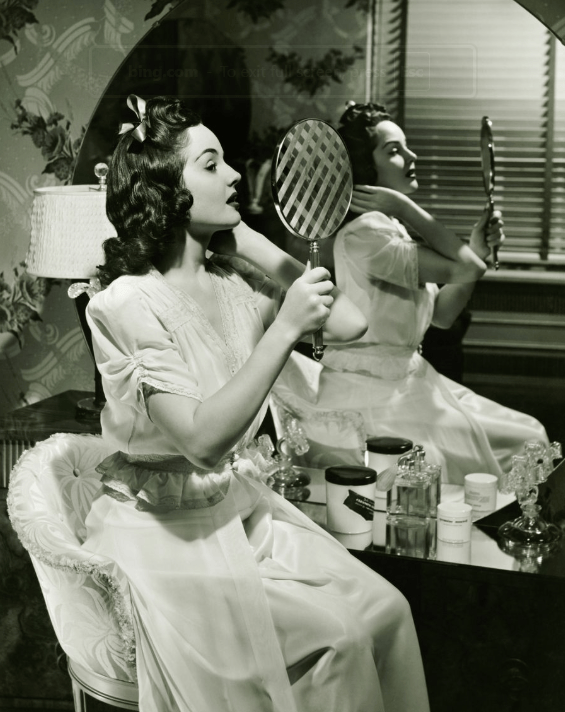
In 1930s Canada, beauty inspiration didn’t come from television or glossy magazines — it came from the radio. During the Depression, radio was the country’s cultural lifeline, carrying Hollywood glamour, music, news, and modern womanhood into homes from coast to coast. For many Canadian women, it was the only affordable escape from daily hardship.
Radio transformed beauty aspirations in subtle but powerful ways. Actresses like Jean Harlow, Greta Garbo, and Carole Lombard became household names not through images, but through voices, interviews and radio dramas. Canadian women imagined their looks — the waved hair, the matte skin, the sculpted brows — long before they ever saw them in print. Beauty became a blend of imagination and aspiration.
Beauty companies quickly recognized radio’s influence. Canadian department stores sponsored programs and cosmetics brands advertised “modern” powder, rouge and cold cream during evening broadcasts. These ads didn’t promise bold transformation; they promised refinement, cleanliness and proper femininity, aligning perfectly with Canadian social norms.
Radio also connected rural and urban women. A farm wife in Saskatchewan could hear the same beauty advice as a city girl in Toronto. Trends spread through voices, not visuals, creating a uniquely Canadian beauty culture shaped by sound rather than sight.
In a decade defined by struggle, radio offered hope — and a vision of beauty that felt attainable, elegant and quietly glamorous.
I’m Stacey Hobbs, thanks fo

