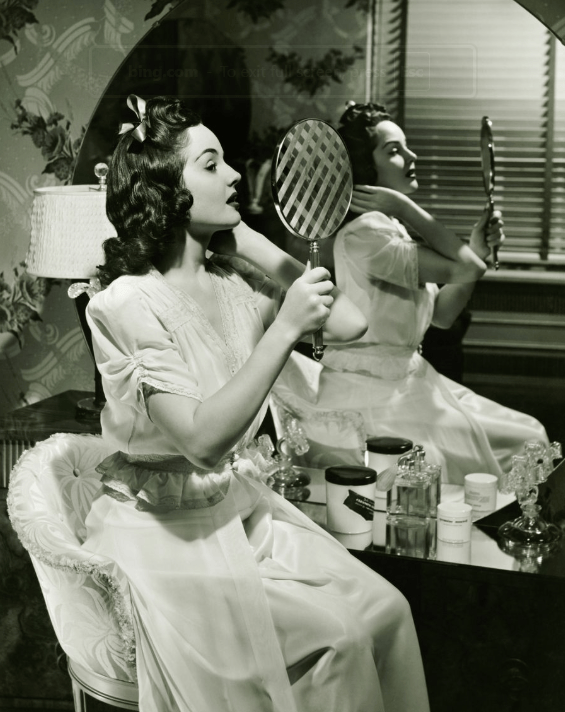
Beauty in 1930s Canada wasn’t uniform — it depended heavily on where a woman lived. Rural and urban Canadian women experienced the decade differently, and their beauty routines reflected those realities.
Urban women, in cities like Toronto, Montréal, Winnipeg, and Vancouver had access to department stores, beauty counters, salons, and modern advertising. They could browse lipstick shades, purchase cold cream, and follow Hollywood trends through radio and magazines. Their beauty routines were shaped by modernity: waved hair, matte powder, carefully applied rouge, and fashionable ready‑to‑wear clothing.
Rural women, meanwhile, lived a more practical version of beauty. Cosmetics were harder to find and often too expensive, so DIY methods dominated: beet‑juice tint, homemade cold cream, soap‑flake setting lotion. Clothing was refashioned, repaired, and repurposed. Hairstyles needed to withstand weather, farm work, and long days — soft waves, braids, and pinned styles were common.
Urban beauty leaned toward aspiration. Rural beauty leaned toward endurance.
Yet both shared a common thread: dignity. Whether a woman lived on a Prairie farm or in a Montréal apartment, beauty offered a sense of pride and normalcy during a decade defined by economic struggle.
Together, rural and urban women shaped a diverse, resilient Canadian beauty culture — one that blended practicality with aspiration, creativity with modernity, and identity with survival.
I’m Stacey Hobbs, thanks for reading Face by Stace! Until next time.
do you feel fabulous today?

