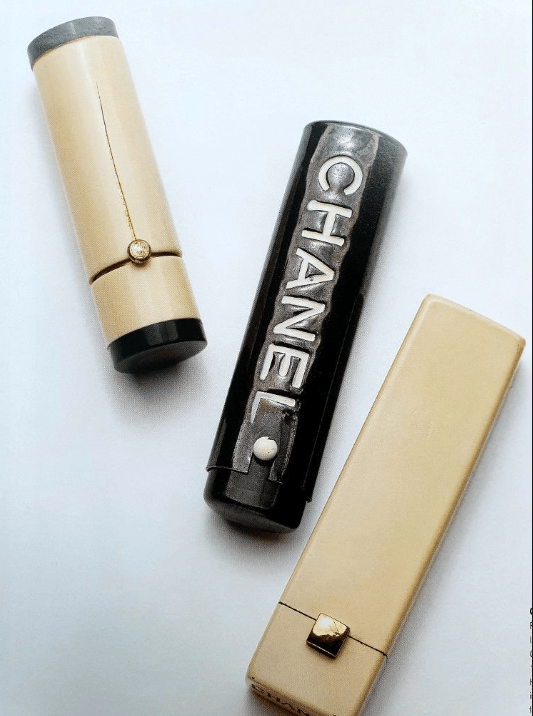
The evolution of the lipstick tube is one of beauty’s most fascinating design stories — a shift from utilitarian metal bullets to the luxury‑coded objects we recognise today. Early lipstick tubes of the 1920s and 1930s were engineered for practicality: compact metal cylinders often brass or nickel, built to protect soft pigments from melting or breaking. These tubes were mechanical marvels using push‑up or early swivel mechanisms that made lipstick portable for the first time. Their industrial look reflected the era’s fascination with modernity and efficiency.
By the 1940s and 1950s, lipstick packaging began to embrace glamour. Hollywood’s influence pushed brands to create tubes that felt feminine, decorative and aspirational. Gold‑tone metals, engraved patterns and sculptural shapes became common. The tube was no longer just a container — it was part of the fantasy.
The true transformation arrived in the mid‑20th century, when luxury houses recognised the branding power of packaging. Chanel, Dior, and Guerlain began designing lipstick tubes that echoed their couture aesthetics: sleek black lacquer, minimalist gold accents, and architectural silhouettes. The tube became a status symbol, instantly recognisable and tied to a brand’s identity.
By the late 20th and early 21st centuries, lipstick packaging had become a cornerstone of luxury marketing. Weighty components, magnetic closures, monogrammed caps, and collectible limited editions turned the tube into an object of desire. Today, the lipstick tube is both heritage and branding — a small, iconic piece of design that communicates luxury before the colour even touches the lips.
I’m Stacey Hobbs, thanks for reading Face by Stace! Until next time.
do you feel fabulous today?

