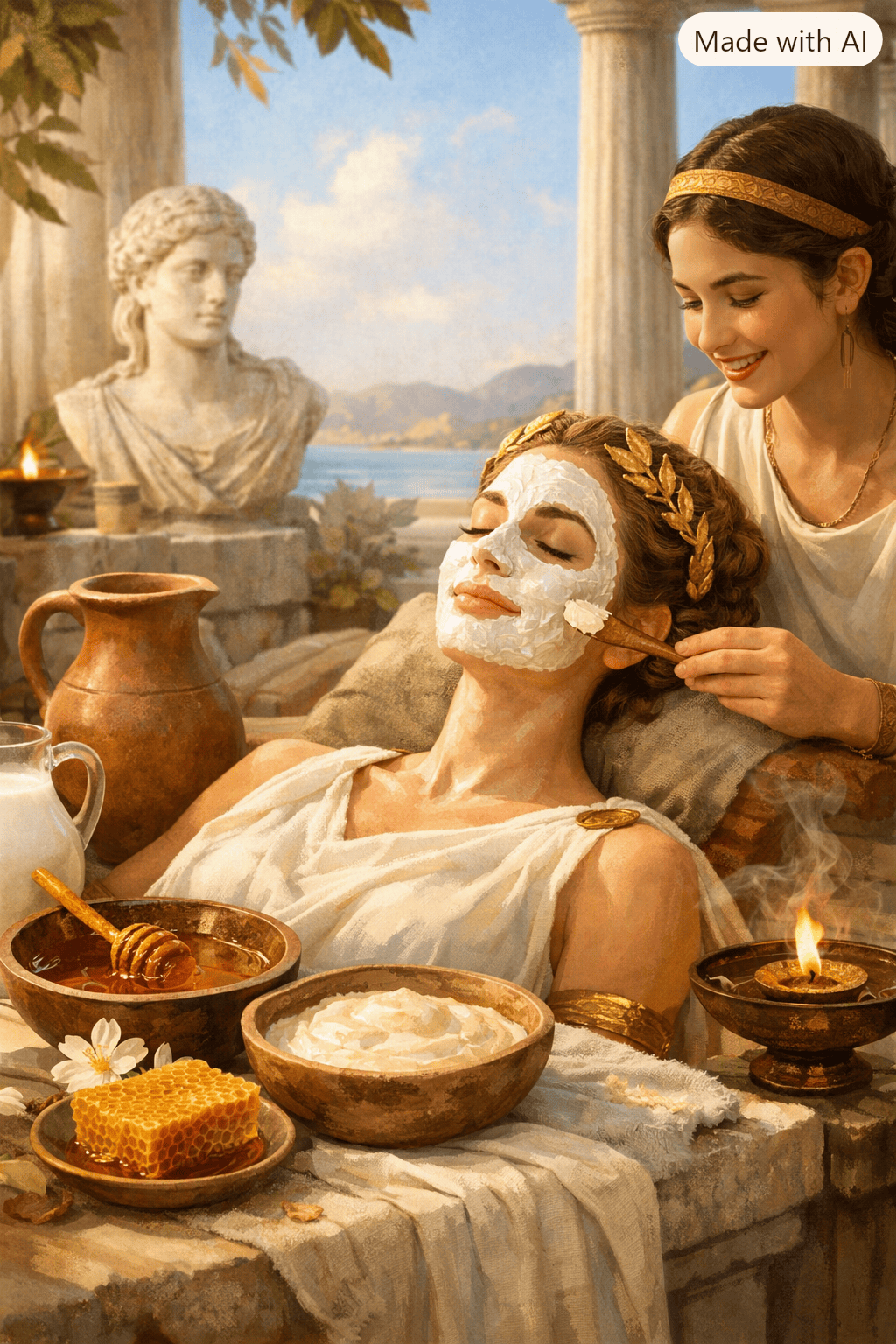
In Ancient Greece, beauty was closely tied to harmony, balance and natural vitality — ideals reflected in their early skincare rituals. Among the most cherished treatments were honey and milk masks, simple yet sophisticated formulas used to soften the skin, brighten the complexion and slow visible signs of aging. These ingredients were abundant in Greek daily life, making them accessible to both elite women and everyday households.
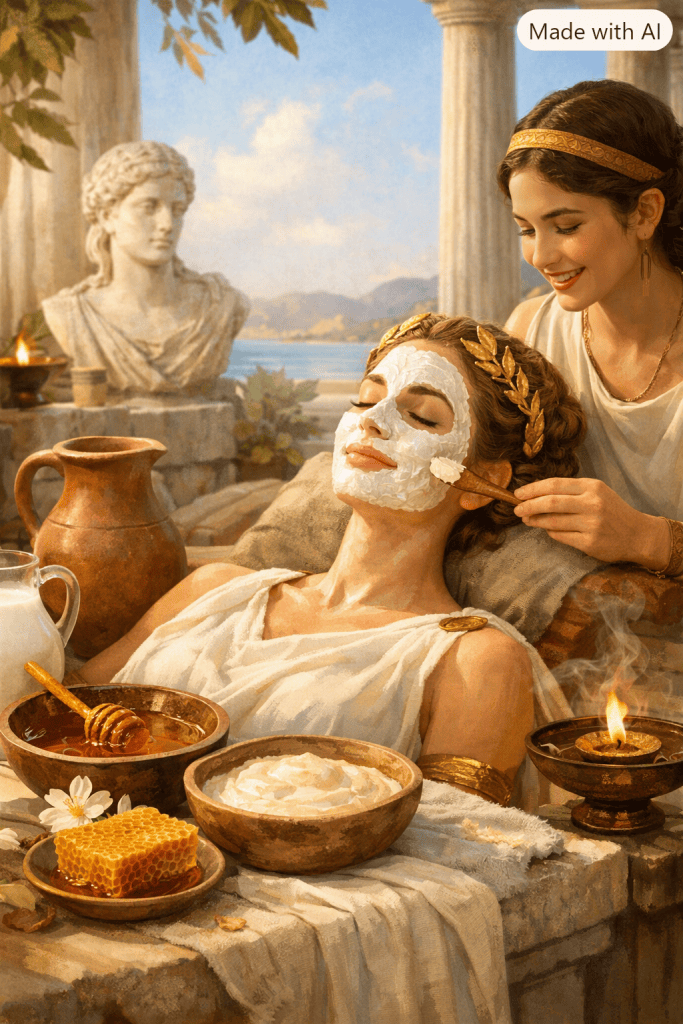
Honey was prized for its humectant and healing properties. It drew moisture into the skin, calmed irritation, and provided a natural glow that aligned with Greek ideals of radiance. Milk, especially goat’s milk, offered gentle exfoliation through lactic acid, helping smooth texture and refine fine lines. Together, honey and milk created a mask that hydrated, brightened, and subtly resurfaced — an early anti‑aging treatment grounded in observation rather than theory.
Greek texts and later Roman writings describe these masks as part of bathing rituals, applied after cleansing to restore softness and resilience. They were also used to prepare the skin before applying scented oils or powders, forming a bridge between skincare and adornment.
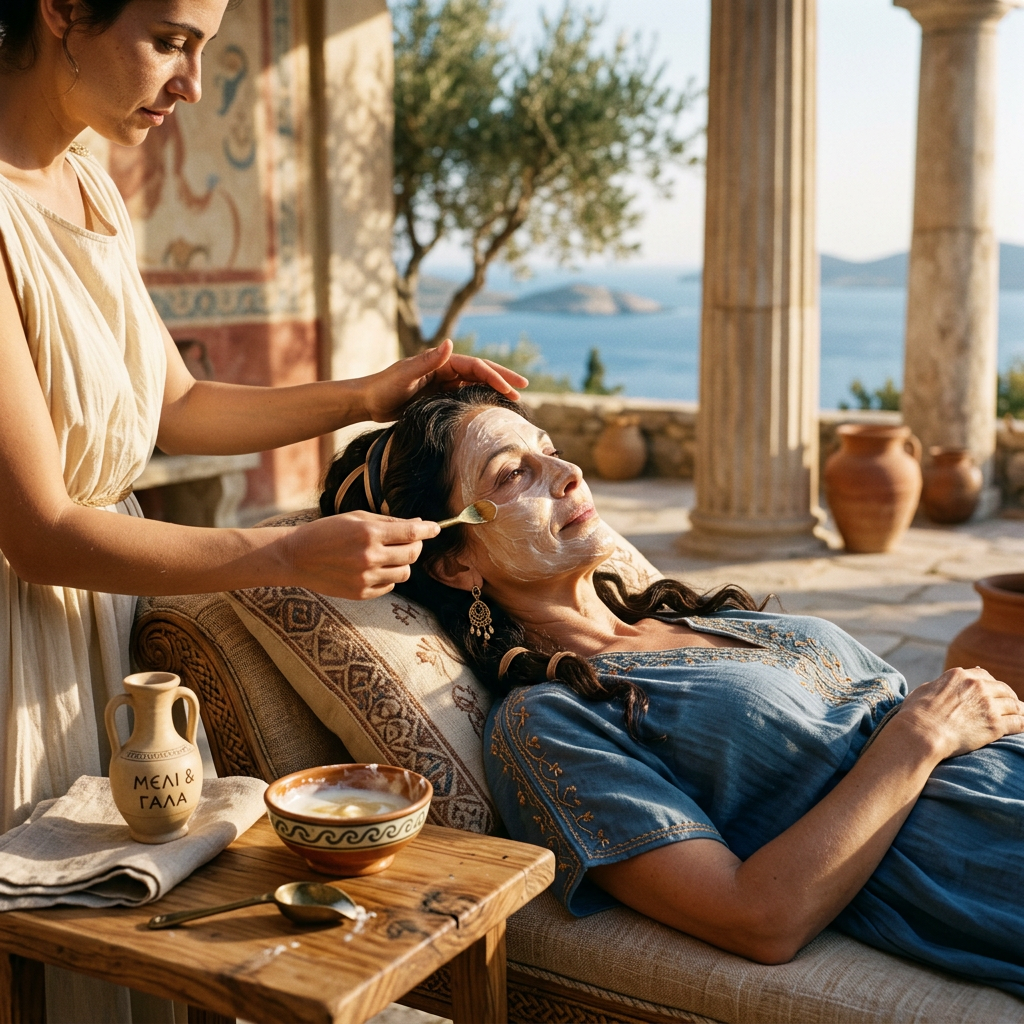
This honey‑and‑milk pairing reveals how advanced Greek beauty culture truly was. Their approach blended nourishment, gentle exfoliation, and natural chemistry, creating treatments that feel remarkably modern. Today, the same ingredients remain staples in skincare for the very reasons the Greeks valued them: hydration, brightness, and timeless, natural radiance.
I’m Stacey Hobbs, thanks for reading Face by Stace! Until next time.
do you feel fabulous today?

