Ancient Egypt remains one of history’s most sophisticated beauty cultures. Cosmetics were not simply decorative — they carried spiritual meaning, medicinal value, and social status. Yet even with their advanced knowledge, some practices came with risks.
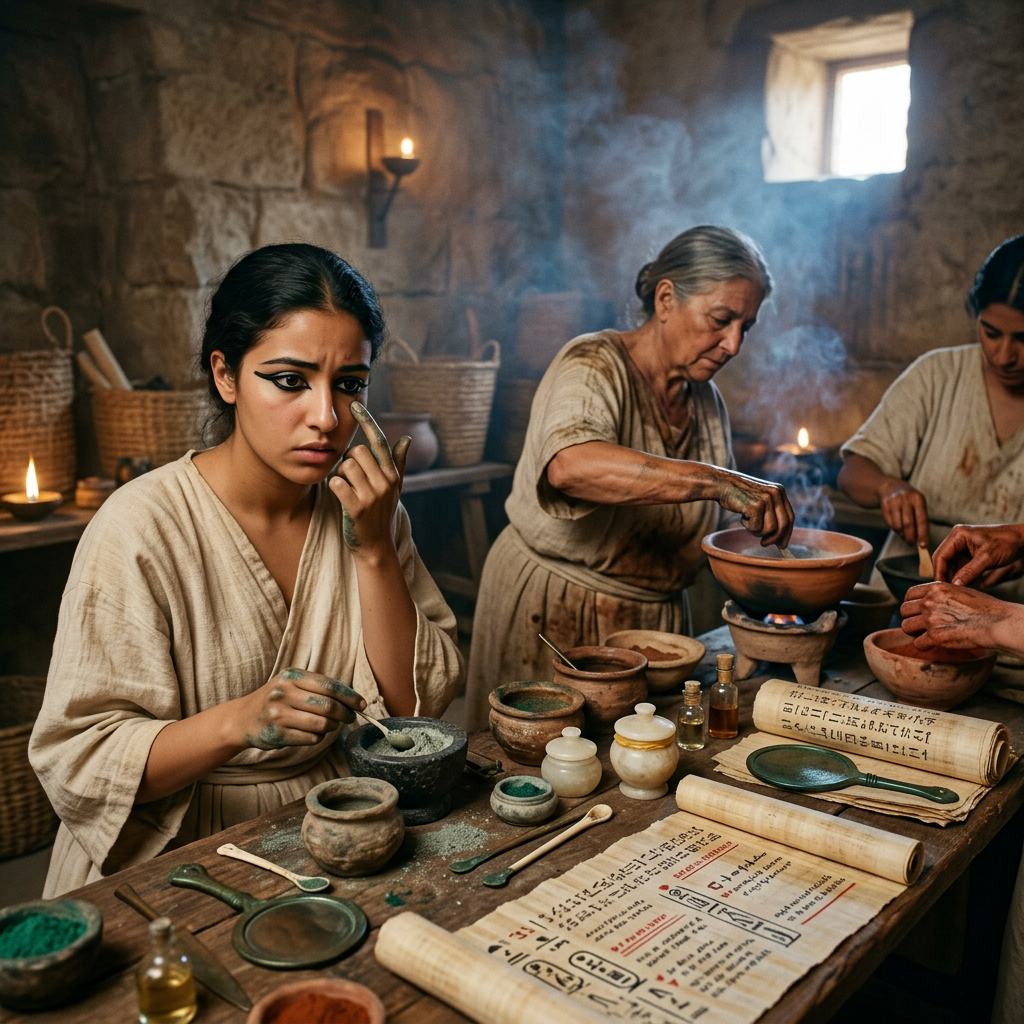
Egyptians famously used kohl eyeliner, a blend of soot, galena and other minerals. While kohl protected the eyes from sun glare and infections, certain lead‑based compounds could irritate the skin with repeated use. Still, Egyptians believed kohl offered divine protection, making it both a cosmetic and a ritual.
Face and body pigments were crafted from malachite, red ochre, and henna. Malachite’s green shimmer symbolized rebirth but its copper content could be harsh on sensitive skin. Red ochre, however, was generally safe and widely used to tint lips and cheeks.
Egyptians excelled in skincare. Perfumed oils made from moringa, almond, and sesame softened the skin and prevented dryness in the desert climate. These oils were often infused with frankincense or myrrh, creating luxurious balms that doubled as early anti‑ageing treatments. The only drawback was spoilage — rancid oils could irritate the skin.
Despite occasional risks, Egyptian beauty was remarkably advanced. Their formulas were intentional, symbolic, and often protective. They understood the connection between appearance, health, and spirituality, creating a beauty culture that still inspires modern rituals.
I’m Stacey Hobbs, thanks for reading Face by Stace! Until next time.
do you feel fabulous today?

