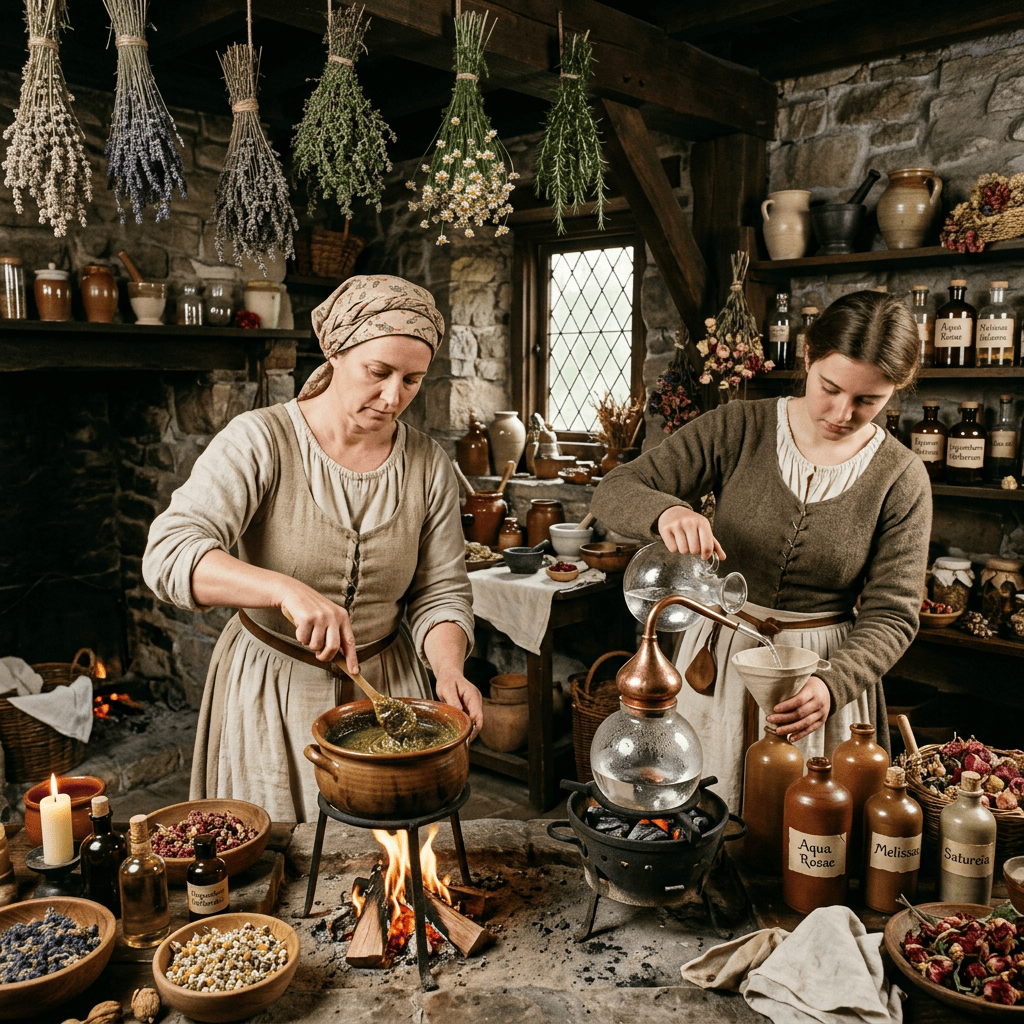
In Medieval Europe, beauty rituals were shaped by nature, practicality, and the quiet craftsmanship of everyday life. Without access to refined oils or modern cosmetics, women turned to herbal balms and floral waters made from ingredients grown in monastery gardens, cottage plots, and wild meadows. These preparations were simple yet surprisingly effective, forming the foundation of early European skincare.
Herbal balms were created by gently warming animal fats or early plant oils with herbs such as lavender, rosemary, chamomile, sage, and calendula. Once infused, the mixture was strained and stored in small pots. These balms softened dry skin, protected against harsh weather, and offered subtle aromatherapeutic benefits. Lavender and rosemary were prized for their cleansing qualities, while calendula was used to soothe irritation and support healing — a natural remedy for the roughness caused by cold winters and outdoor labour.
Floral waters, or early hydrosols, were produced through primitive distillation techniques. Rosewater became the era’s most beloved beauty tonic, used to freshen the face, brighten the complexion, and lightly perfume the skin. Elderflower water was another favourite, believed to soften and refine. These waters were considered both luxurious and accessible, offering a gentle elegance in an otherwise rugged period.
Medieval Europe’s beauty rituals reveal a world where skincare was rooted in nature, simplicity, and quiet refinement — proving that even in the most challenging eras, beauty remained a thoughtful, botanical art.
I’m Stacey Hobbs, thanks for reading Face by Stace! Until next time.
do you feel fabulous today?

