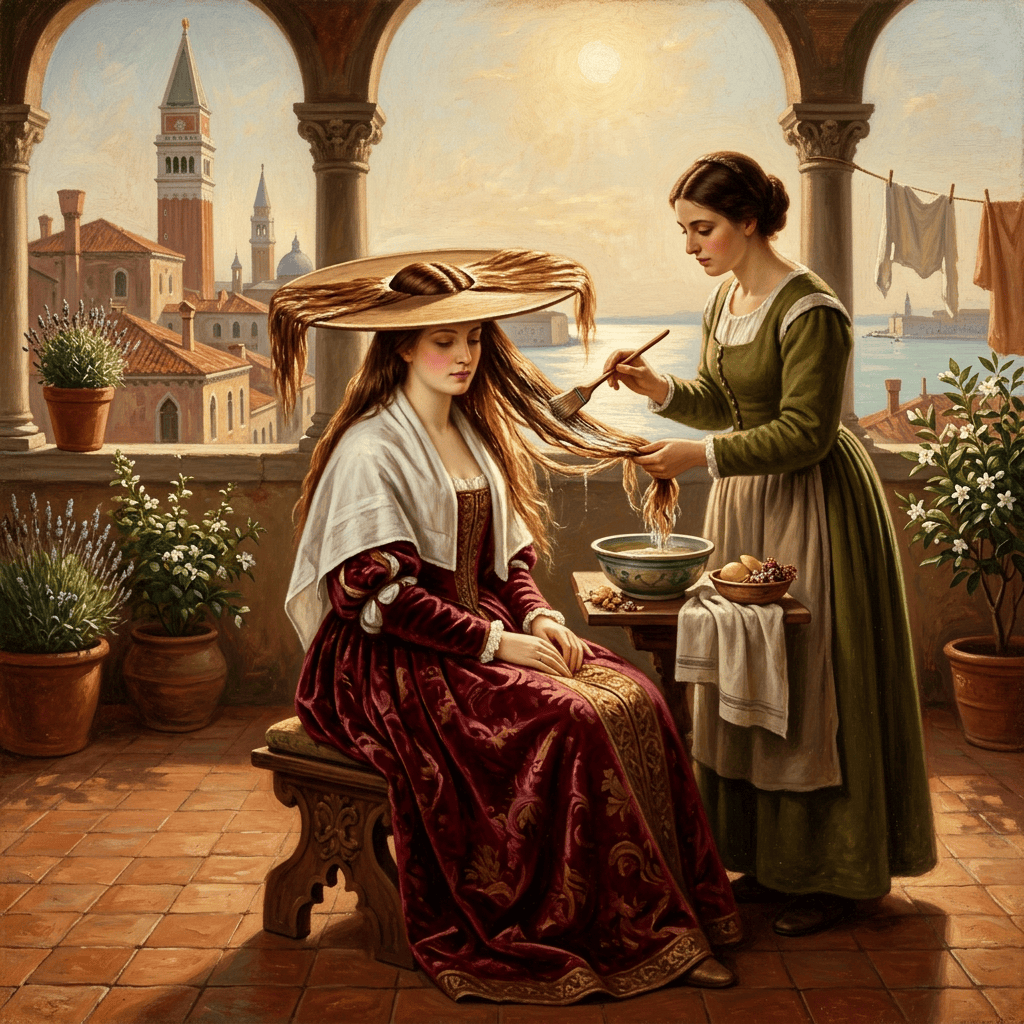
In Renaissance Europe, beauty was an art form and hair played a central role in expressing refinement, status, and femininity. Pale, golden hair became the era’s ideal, inspired by classical notions of purity and by the ethereal blondes painted by Botticelli, Titian, and Veronese. Achieving this coveted shade required elaborate hair‑bleaching rituals that blended vanity, ingenuity and a touch of danger.
Women created bleaching mixtures using lemon juice, saffron, alum, white wine, and even lye‑based pastes. These concoctions were applied generously to the hair, which was then combed through to ensure even saturation. The process didn’t stop there — sunlight was essential. Women sat outdoors for hours wearing wide‑brimmed bleaching hats with the crown cut out, allowing the sun to hit the hair while shielding the face from tanning. Fair skin and fair hair had to be preserved together.
The sun activated the citrus and herbal compounds, gradually lifting colour and creating the soft, golden tones associated with Renaissance beauty. The results were admired, but the methods were harsh. Repeated bleaching left hair dry, fragile, and prone to breakage — a sacrifice many women willingly made to embody the era’s aesthetic ideals.
Despite its risks, hair bleaching symbolized elegance, youth, and cultural sophistication. It reflected a period when beauty was intertwined with art, symbolism, and meticulous ritual — proving that the pursuit of the “ideal look” has always been both creative and complex.
I’m Stacey Hobbs, thanks for reading Face by Stace! Until next time.
do you feel fabulous today?

