Reactive skin has become one of the most common — and most misunderstood — conditions in modern skincare. It’s not a skin type and it’s not the same as sensitive skin. Reactive skin is a behaviour: skin that responds quickly, intensely and unpredictably to products, weather, stress or even minor environmental shifts.

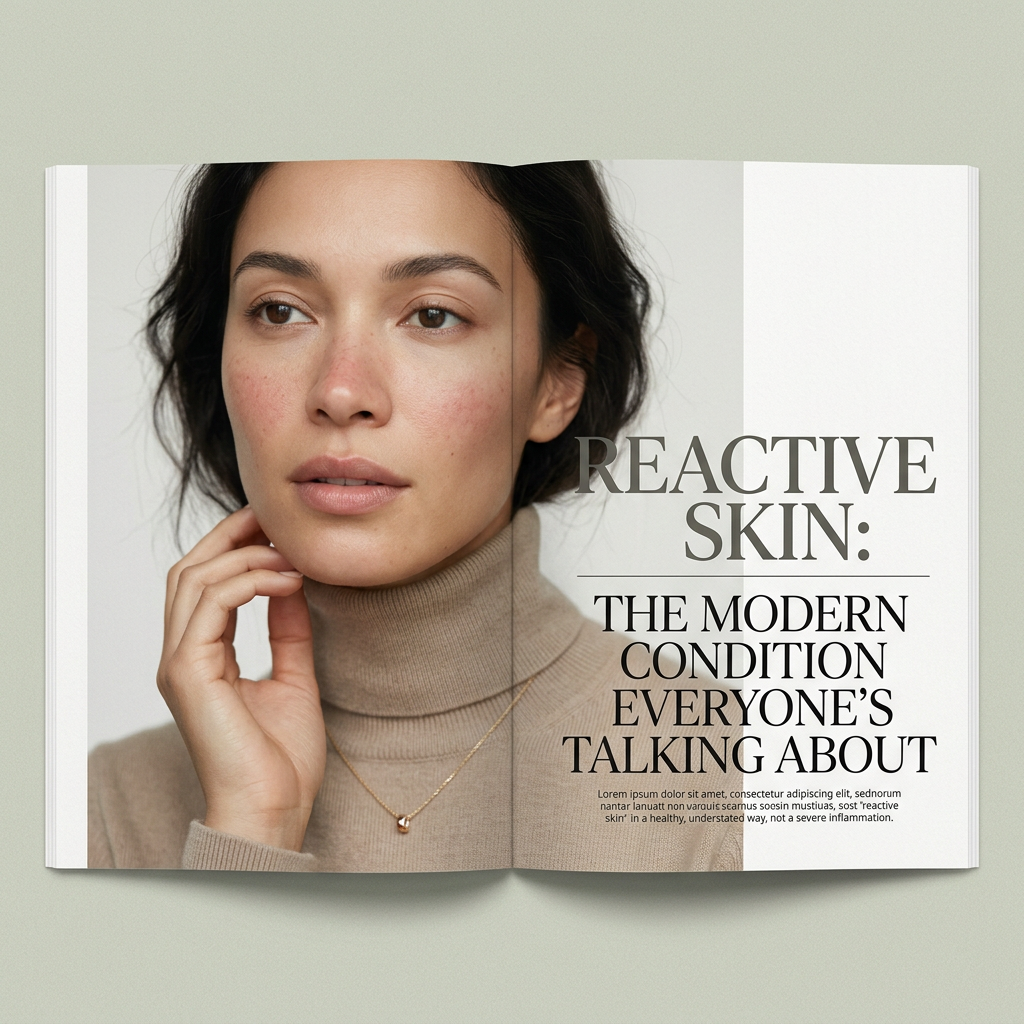
What’s driving the rise? A perfect storm of over‑exfoliation, strong actives, climate extremes and the pressure to “do more” with skincare. Years of layering acids, retinoids, scrubs and harsh cleansers have left many people with a compromised moisture barrier. When the barrier is thin or damaged, the skin becomes hyper‑responsive — stinging at moisturizers, flushing at serums and reacting to ingredients it once tolerated.
Reactive skin also reflects lifestyle. Stress, lack of sleep, hormonal changes, and even air quality can trigger flare‑ups. In Canada and the U.S., fluctuating temperatures and low humidity add another layer, making the skin more prone to dehydration and irritation.
The hallmark signs are familiar: redness, tightness, burning, sudden breakouts and a “hot” feeling after applying products. But the solution isn’t more treatments — it’s fewer. Reactive skin thrives on simplicity: gentle cleansers, barrier‑repair moisturizers, hydration‑first routines and a temporary pause on strong actives.
The rise of reactive skin is re-shaping the industry. Estheticians and boutique spas are shifting toward barrier‑support facials, water‑based exfoliation and calming techniques inspired by Korean and Japanese esthetics. Consumers are moving away from aggressive routines and toward skin health, not skin stress.
Reactive skin isn’t a trend — it’s a wake‑up call. And it’s changing how we care for our skin, one barrier‑friendly step at a time.
I’m Stacey Hobbs, thanks for reading Face by Stace! Until next time.
do you feel fabulous today?

