A cultural shift shaped by futurism, fear, optimism and the birth of digital identity
The Y2K era is often mistaken for a single night—December 31, 1999—but culturally, it spans 1999 to 2004, with influence extending into 2006. This broader window captures the full arc of early‑millennial life: the anxiety of entering a new millennium, the relief when nothing collapsed, and the sudden optimism that shaped the aesthetic and technological mood of the early 2000s.
Welcome to the Millennial era! And this is the beginning of defining the Millennial era.
As the ever so popular catchphrases went, “Whassssup!” “That’s hot!” “That’s sick”.
Enjoy!
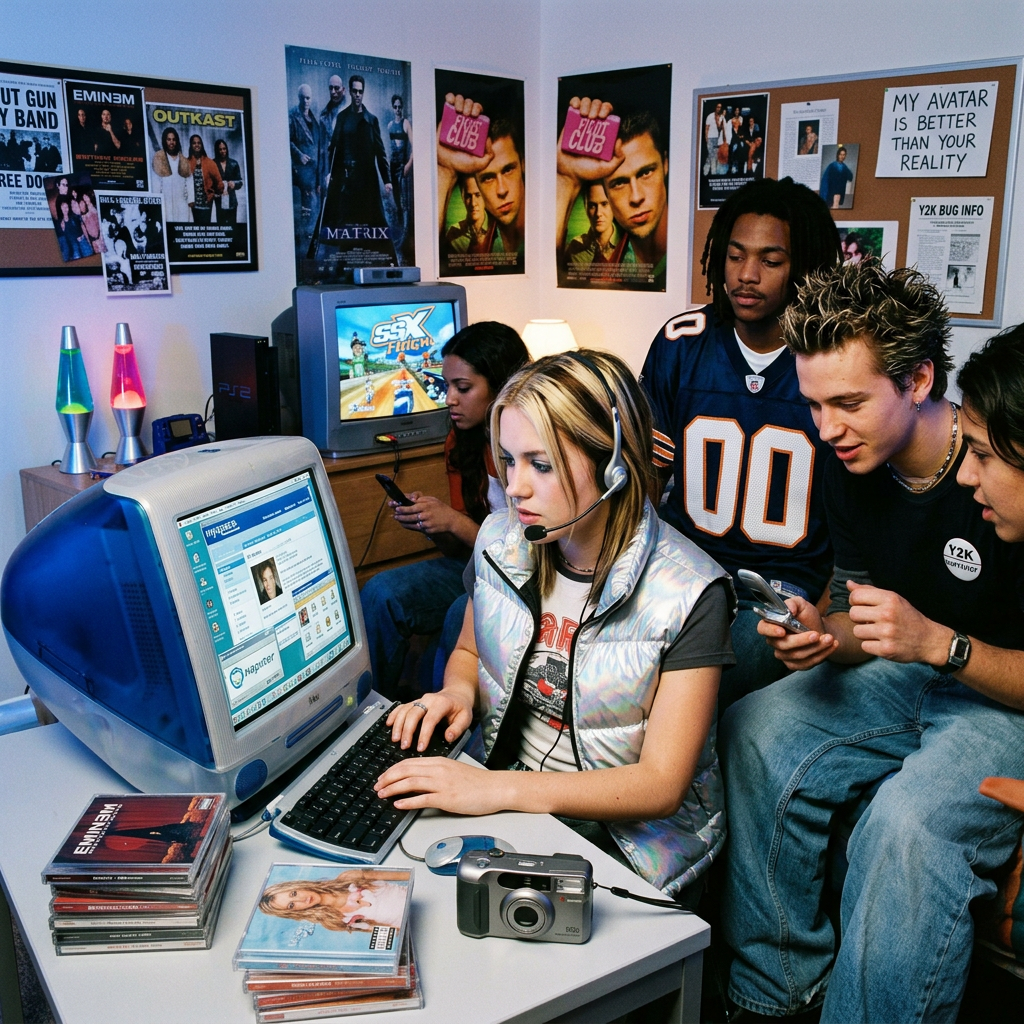

In late 1999, the world braced for the Y2K bug. Banks, airlines and governments prepared for potential system failures. But when midnight arrived and the world continued un-interrupted, a collective sense of relief transformed into excitement. The future hadn’t broken; it had begun. That emotional shift became the foundation of the Y2K cultural identity.
From 2000 to 2004, futurism dominated design, media and technology. Chrome, holographic finishes, neon accents and translucent plastics defined everything from advertising to electronics. Early digital devices—colourful iMacs, flip phones, MP3 players—introduced Millennials to a new kind of personal technology. This was the first generation to build digital identities through MSN Messenger, AIM, MySpace, and early blogs.
Culturally, Y2K was shaped by mall life, teen magazines, pop‑star influence and the explosion of reality TV. It was a moment of novelty, experimentation, and optimism, when technology and culture merged for the first time.
By 2004–2006, the aesthetic softened as social media emerged and devices became sleeker. Yet the Y2K mood lingered, marking the transition from analog childhood to digital adulthood.
For Millennials, Y2K wasn’t just a trend—it was the beginning of modern life.
I’m Stacey Hobbs, thanks for reading Face by Stace! Until next time.
do you feel fabulous today?

