Why are Korean Facials Trending? And in Canada? And in America?
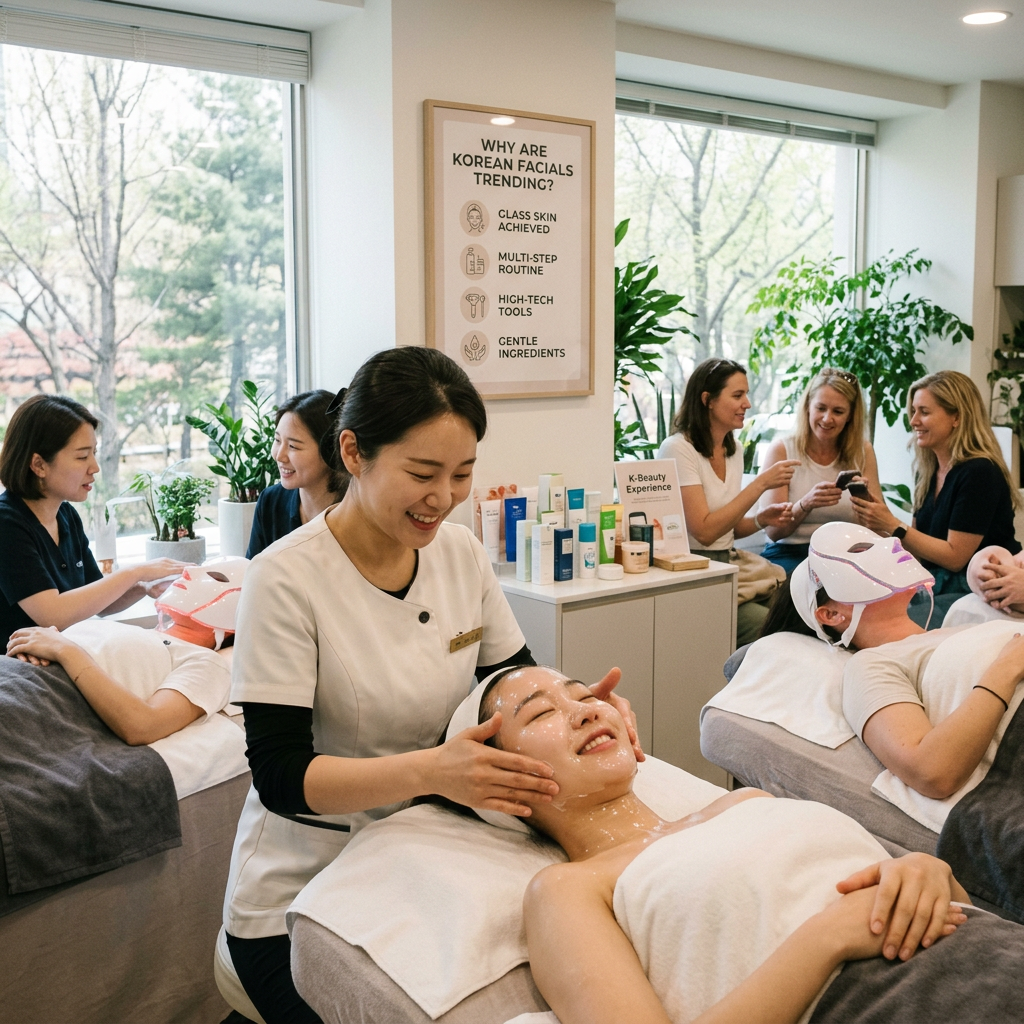
Korean facials are having a moment — not just in K‑beauty circles but across mainstream spas, dermatology clinics and TikTok feeds. Their rise isn’t accidental; it’s the result of a global shift toward gentler, technique‑driven skincare that prioritizes long‑term skin health over quick fixes.
At the core of the trend is the Korean philosophy of prevention over correction. These facials focus on hydration, barrier support and circulation rather than aggressive exfoliation. Treatments like glass‑skin facials, oxygen domes, lymphatic massage and multi‑step layering appeal to consumers who want visible results without downtime. In a beauty landscape tired of irritation from peels and retinoids, Korean facials feel like a reset.
They’re also incredibly sensory. Warm steam, cooling masks, rhythmic massage and lightweight essences create a spa experience that feels both luxurious and approachable. This “skin therapy” vibe aligns perfectly with the wellness era, where people want treatments that relax the nervous system as much as they refine the complexion.
Technology plays a role too. Korean esthetics often incorporate LED therapy, microcurrent, ultrasound infusion and water‑based exfoliation — devices that look futuristic but feel gentle. The combination of tech + touch is a major draw for clients who want innovation without harshness.
Finally, social media has amplified the aesthetic. The dewy finish, the meticulous steps, the calming visuals — Korean facials are inherently “shareable,” making them ideal for beauty creators and spa marketing.
In short, Korean facials are trending because they deliver what modern consumers crave: results, ritual and relaxation wrapped into one polished experience.
And in Canada?
Korean facials aren’t just trending globally — they’ve carved out a strong, very real presence in Canada’s beauty and wellness market. What’s interesting is how the trend has landed here: not as a passing fad but as part of a broader shift in Canadian skincare culture toward gentler, results‑driven treatments.
Canadian consumers have become increasingly ingredient‑literate and barrier‑focused especially after years of over‑exfoliation and retinoid fatigue. Korean facials fit neatly into that reset. Their emphasis on hydration, calming techniques and non‑irritating technology aligns with what Canadian clients are actively seeking: visible results without redness, peeling or downtime.
The rise of Korean esthetics in Canada also mirrors the growth of boutique spas and independent estheticians who are moving away from “one‑size‑fits‑all” facials. Many Canadian practitioners have adopted Korean techniques — like lymphatic drainage, water‑based exfoliation and multi‑step layering — because they’re adaptable to diverse skin conditions including sensitive and reactive skin, which is common in colder climates.
Accessibility plays a role too. Korean beauty retailers and training programs have expanded across major Canadian cities, making both products and education easier to access. Social media has amplified this, with Canadian creators showcasing glass‑skin facials, LED domes and dew‑boosting treatments that look as soothing as they feel.
In short, Korean facials are trending in Canada because they meet Canadian skincare priorities: gentle, effective, tech‑enhanced, and rooted in long‑term skin health rather than quick, aggressive fixes. They’re not just popular — they’re becoming part of the Canadian facial vocabulary.
And in America?
In the United States, Korean facials aren’t just trending — they’ve become a full‑blown beauty category, re-shaping how American consumers think about professional skincare. The U.S. market tends to adopt trends quickly but what’s notable here is how deeply Korean esthetics have integrated into mainstream spa culture rather than sitting on the fringe as a niche import.
American consumers are gravitating toward Korean facials for the same reasons Canadians are: gentleness, hydration and visible results without downtime. But in the U.S., the trend is amplified by scale. Major cities like New York, Los Angeles, and Chicago have seen a surge in Korean‑trained estheticians, K‑beauty spas and hybrid clinics that blend Korean techniques with American dermatology. The “glass skin” aesthetic, in particular, has become a cultural touchpoint — a look that’s instantly recognizable and highly aspirational.
The American market also loves innovation and Korean facials deliver it. Devices like oxygen domes, hydro-dermabrasion, ultrasound infusion and LED therapy fit neatly into the U.S. appetite for tech‑forward treatments. Add in the multi‑step ritual and you get a service that feels both high‑touch and high‑tech — a combination American consumers respond to strongly.
Social media has supercharged the trend. U.S. dermatologists regularly showcase Korean facials, making them feel accessible, modern and results‑driven. TikTok and Instagram have turned the dewy, post‑facial glow into a visual shorthand for “healthy skin.”
In short, Korean facials are thriving in America because they align with U.S. beauty values: innovation, instant visible payoff, and a wellness‑infused experience that feels luxurious without being aggressive. They’re not just popular — they’re shaping the American facial standard.
I’m Stacey Hobbs, thanks for reading Face by Stace! Until next time.
do you feel fabulous today?

