Georgian and Rococo beauty culture was a performance — extravagant, theatrical and unmistakably artificial. In the 18th century, appearance wasn’t simply personal expression; it was social currency. White powdered wigs and heavy rouge became the era’s defining symbols, transforming faces and silhouettes into curated works of art.
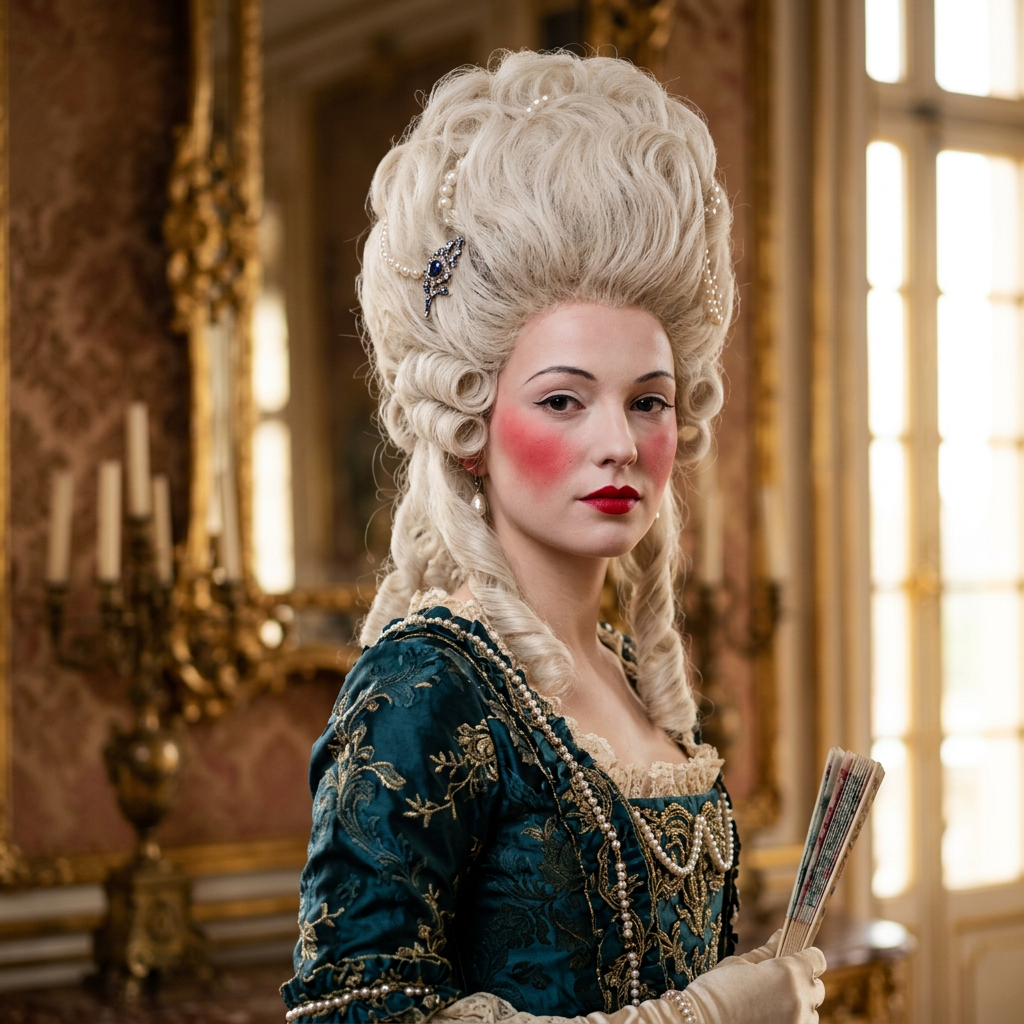
Powdered wigs, often towering and elaborately styled, were crafted from human hair, horsehair, or wool. Their iconic white colour came from starch‑based powders, sometimes scented with lavender or orange blossom. The whiteness signalled refinement, wealth, and a deliberate detachment from physical labour. These wigs weren’t subtle; they were architectural, sculptural and designed to be noticed.
Rouge, meanwhile, was applied with unapologetic intensity. Made from carmine, vermilion or even toxic lead‑based pigments, it created a vivid flush that contrasted sharply with pale, powdered skin. The look was intentionally exaggerated — a stylized interpretation of youth, vitality and flirtation. In salons and court gatherings, rouge communicated confidence and social sophistication.
Together, wigs and rouge formed a beauty language rooted in spectacle. Georgian and Rococo aesthetics celebrated artifice, embracing beauty as a crafted identity rather than a natural state. These rituals remind us that historical beauty was often about storytelling: status, desire, and cultural performance woven into every powdered curl and painted cheek.
The 18th century didn’t whisper beauty; it staged it.
I’m Stacey Hobbs, thanks for reading Face by Stace! Until next time.
do you feel fabulous today?

