Hair in Ancient Greece was more than adornment — it was identity, symbolism, and social language. Greek beauty culture placed enormous value on hair that appeared healthy, glossy, and thoughtfully arranged. Styles shifted across eras, but the underlying philosophy remained constant: hair should reflect harmony, virtue, and natural elegance.
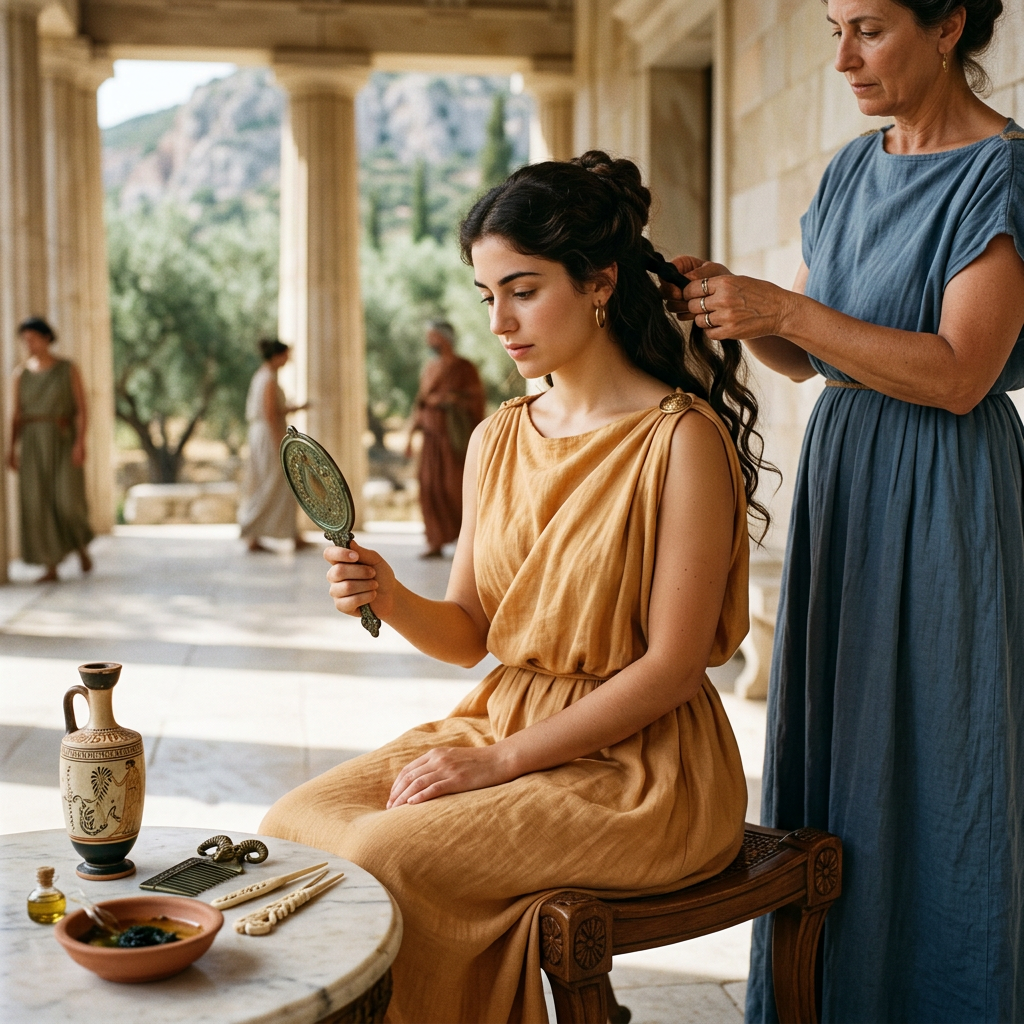
Women often wore their hair long, parted at the centre, and styled into soft waves or braided crowns. These braids were woven with ribbons, wool cords, or delicate fillets that framed the face and added gentle movement. For festivals and religious ceremonies, women adorned their hair with fresh flowers, gold ornaments, or diadem‑like bands that echoed the aesthetics of goddesses depicted in sculpture.
Men’s grooming was equally intentional. Short, neatly maintained hair symbolized discipline and civic respectability, while beards carried philosophical meaning — associated with wisdom, maturity, and intellectual life.
Haircare itself was ritualistic. Olive oil was massaged into the scalp to nourish and add shine, while combs made from bone or wood smoothed and shaped the hair. Some households used herbal rinses made from rosemary, mint, or chamomile to refresh the scalp and enhance fragrance. Professional attendants, known as koureis, assisted wealthier families, ensuring hair was styled for public life, athletic events, or ceremonial gatherings.
Ancient Greek hair rituals reveal a culture that saw beauty as balance — a blend of nature, care, and symbolism. Every curl, braid and ribbon contributed to a visual language that celebrated refinement and identity.
I’m Stacey Hobbs, thanks for reading Face by Stace! Until next time.
do you feel fabulous today?

