White face powders and rouge were two of the most iconic elements of Ancient Chinese beauty, shaping complexion ideals for over a thousand years. These cosmetics weren’t simply aesthetic choices — they reflected philosophy, status and the cultural belief that beauty should express harmony and refinement.
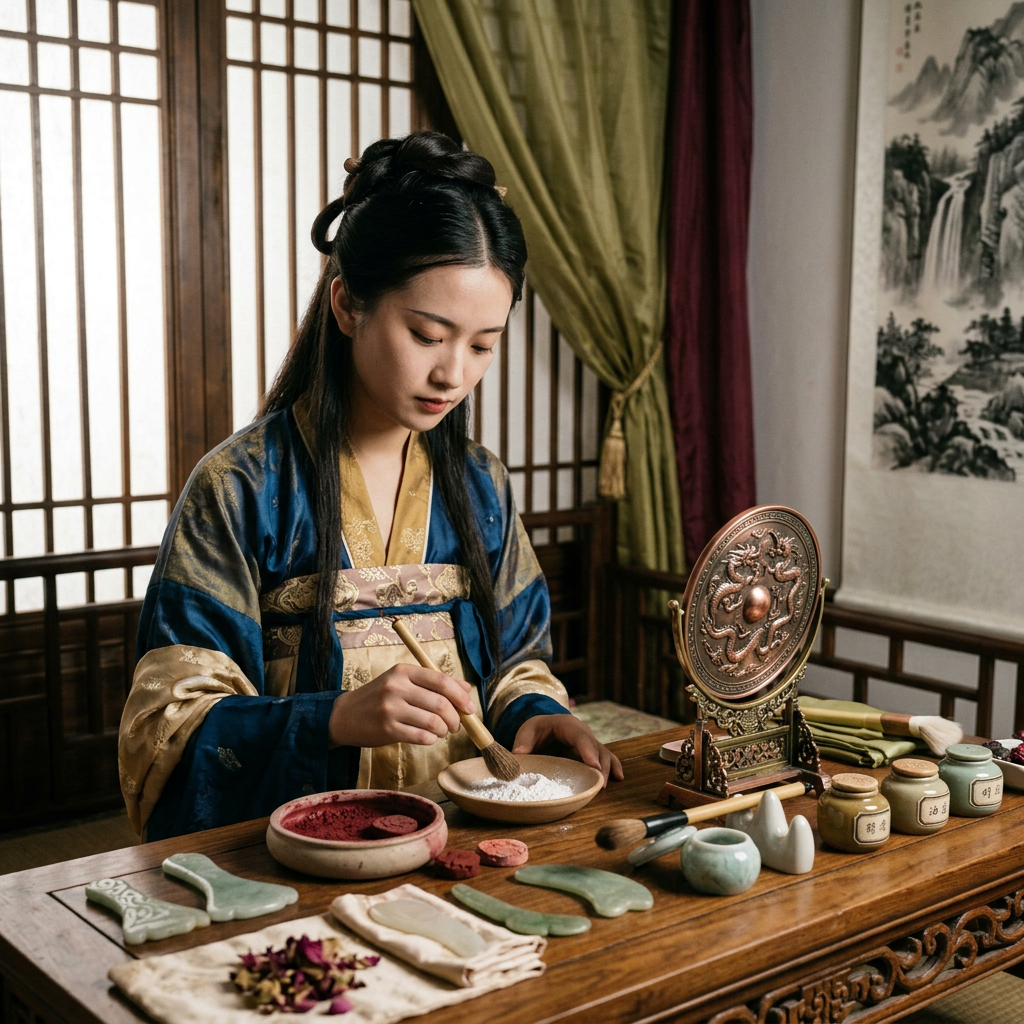
White face powders were crafted from finely milled rice, silk or lead‑free mineral blends. Applied lightly, they created a soft, matte finish associated with purity, clarity, and scholarly elegance. During the Song Dynasty, pale skin symbolized inner cultivation and gentle femininity, making white powders a daily essential for court women. The finish wasn’t stark — it was subtle, velvety, and intentionally understated.
Rouge, on the other hand, brought life and emotion to the face. Made from safflower, peony petals, or cinnabar alternatives, rouge was applied to the cheeks and sometimes the lips. Tang‑dynasty women favoured bold, warm tones that reflected the era’s love of vibrancy and artistic expression. In later periods, rouge became softer and more delicate, aligning with shifting beauty ideals.
Together, white powder and rouge created balance: clarity paired with vitality, softness paired with warmth. The contrast reflected yin and yang — a core Chinese concept of harmony.
These cosmetics were stored in lacquered boxes, porcelain jars or silk pouches turning makeup into ritual. Ancient Chinese complexion traditions reveal a culture where beauty was symbolic, intentional and deeply tied to identity.
I’m Stacey Hobbs, thanks for reading Face by Stace! Until next time.
do you feel fabulous today?

