Cleopatra’s beauty legacy is one of the most mythologised in history — but the truth is far more sophisticated than the legends of donkey‑milk baths and extravagant indulgence. Her beauty rituals were rooted in science, strategy, and sensory experience. Cleopatra understood the power of presentation and she used beauty as both self‑care and political influence.
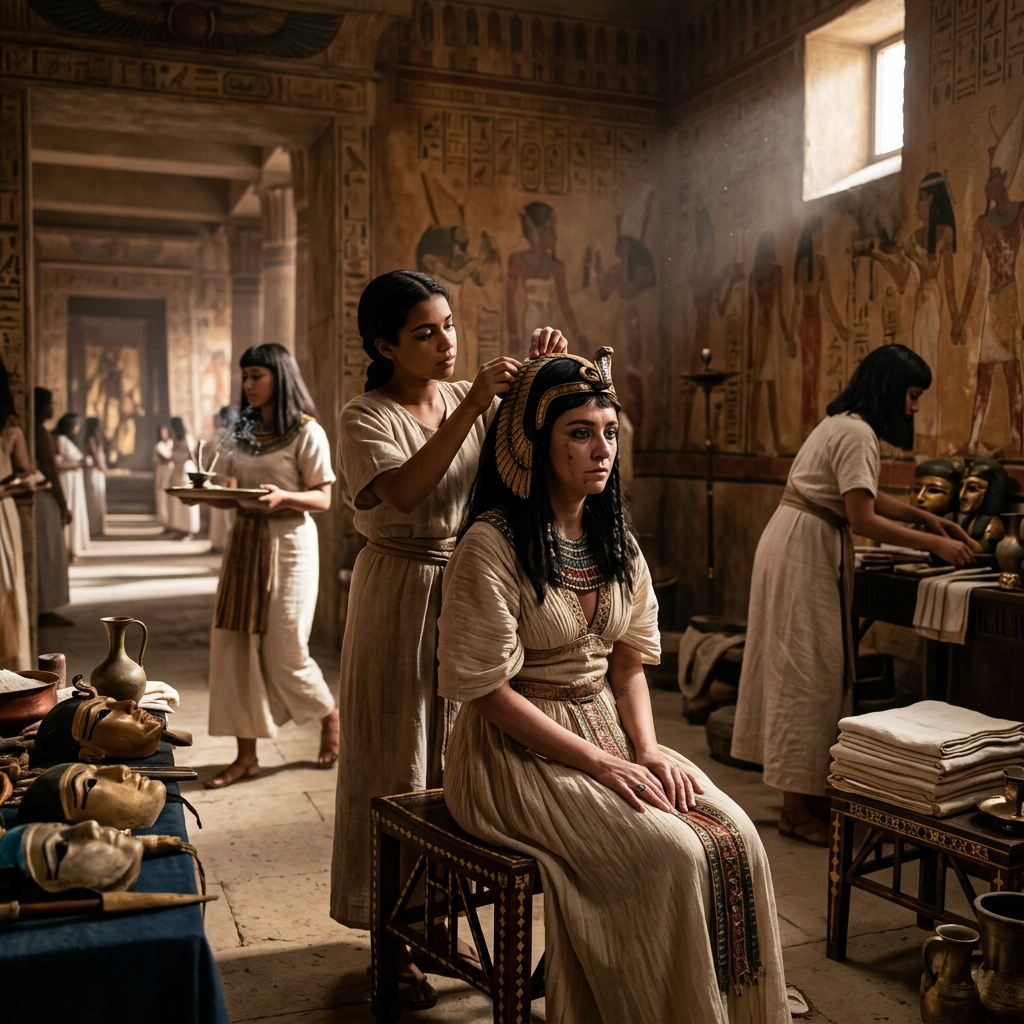
Her skincare centred on hydration, exfoliation, and botanical nourishment. Lactic‑acid sources like sour milk were used across Egypt, but there’s no evidence Cleopatra bathed in donkey milk. What is documented is her love of bathing itself — warm water infused with herbs, oils, and minerals to soften the skin and calm the body. Honey, aloe, and clay masks were common, offering moisture, soothing benefits, and gentle detoxification.
Her iconic kohl eyeliner was more than aesthetic. Made from galena and malachite, it protected the eyes from sun glare and had antimicrobial properties. Cleopatra’s elongated cat‑eye wasn’t random — it echoed sacred imagery including the protective symbolism of the Nile’s fish and the Eye of Horus.
Fragrance was one of her greatest tools. Cleopatra’s perfumers crafted blends using myrrh, cinnamon, cardamom, and blue lotus. Scent was her signature — a sensory calling card that lingered long after she left a room.
Cleopatra’s beauty wasn’t excess. It was ritual, intention, and political mastery. She understood that beauty could communicate power, intellect and identity.
I’m Stacey Hobbs, thanks for reading Face by Stace! Until next time.
do you feel fabulous today?

