Elizabeth Taylor’s Cleopatra didn’t just redefine historical glamour — it reshaped 1960s beauty. Her cat eye became a global phenomenon, influencing fashion magazines, makeup counters, and everyday women who wanted the same regal, elongated gaze. What began as a cinematic design by makeup artist Alberto de Rossi quickly evolved into one of the decade’s most defining beauty trends.
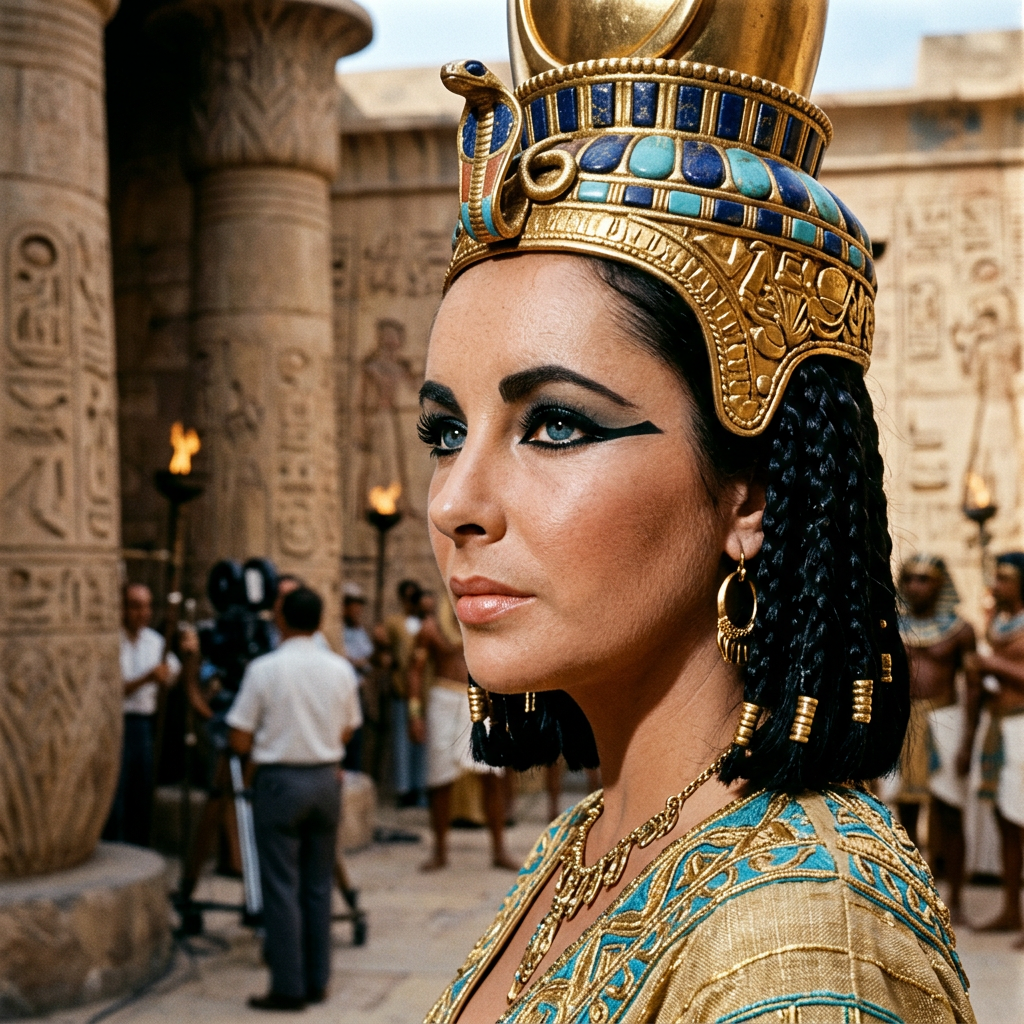
Before Cleopatra (1963), eyeliner existed, but it wasn’t a cultural staple. The 1950s favoured soft definition, modest flicks, and natural lashes. Taylor’s Cleopatra shattered that softness. De Rossi created graphic, architectural wings that extended dramatically toward the temples, lifting her entire face and giving her eyes a hypnotic, queen‑like intensity. The look was bold, exotic, and unlike anything seen in mainstream beauty.
When the film premiered, the impact was immediate. Beauty editors published “Cleopatra eye” tutorials. Cosmetic brands released kohl pencils and cake liners marketed specifically for achieving Taylor’s look. Department stores reported surges in eyeliner sales. Women across North America and Europe began experimenting with extended wings, floating crease lines, and heavier lower‑lash definition.
The Cleopatra cat eye became the blueprint for the 1960s mod eye, influencing icons like Sophia Loren, Brigitte Bardot, and later Twiggy. It marked the shift from subtle enhancement to expressive, statement‑making makeup.
Elizabeth Taylor didn’t just wear a cat eye — she launched a movement. Her Cleopatra liner became the birth of the modern wing, a beauty signature that still defines editorial makeup, red‑carpet looks, and everyday glamour.

