Elizabeth Taylor’s transformation into Cleopatra wasn’t just costume and liner — it was a full‑scale beauty operation designed to create a queen who looked luminous, untouchable, and almost supernatural. Taylor committed to the role with intense discipline, adopting skin rituals that gave her complexion the regal glow audiences still associate with the film.
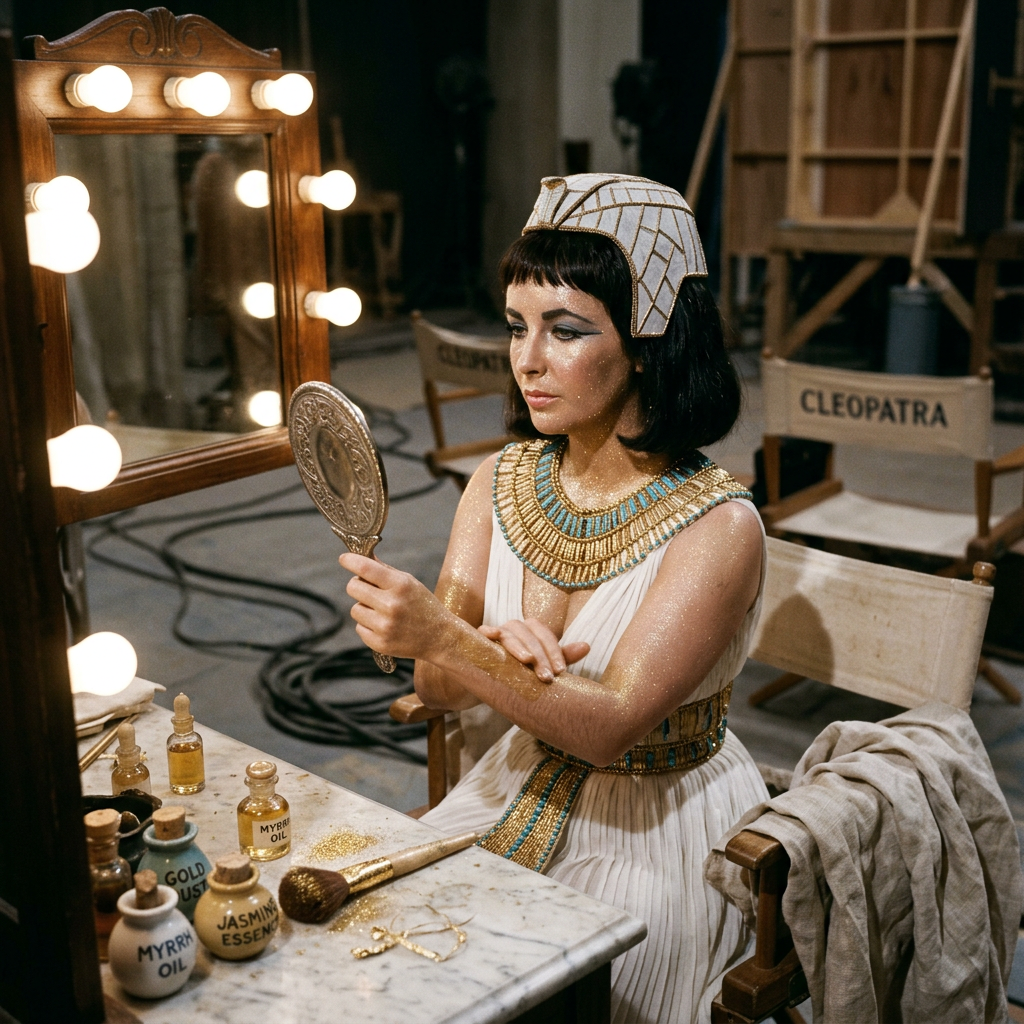
Her primary ritual was oil‑based hydration. Makeup artists massaged lightweight oils into her skin before foundation, creating a supple, reflective base that mimicked the richness of ancient beauty practices. Taylor loved the effect so much she continued using oils long after filming wrapped. The technique softened her features, added warmth, and made her skin appear almost candlelit on camera.
To enhance Cleopatra’s mythic radiance, Taylor’s team used gold‑dust shimmer on her shoulders, arms, and décolletage. The particles caught light during wide shots, giving her body a subtle, sun‑god glow. It wasn’t glitter — it was micro‑fine shimmer applied sparingly to create dimension without sparkle.
Her eyes were the centrepiece, but her skin carried the story. Taylor avoided heavy powders during Cleopatra, choosing instead a semi‑dewy finish that allowed her natural texture to show through. This decision made her look more human, more powerful, and more believable as a queen who commanded attention through presence rather than perfection.
Elizabeth Taylor didn’t just play Cleopatra. She embodied her — through oils, shimmer, and a skin ritual that made her glow like royalty.

