Marlene Dietrich didn’t just have cheekbones — she had architecture. Her face became one of the most recognizable silhouettes in cinema, and it wasn’t by chance. Dietrich engineered her cheekbones with a level of precision that bordered on scientific, turning lighting, shading, and technique into tools of transformation.
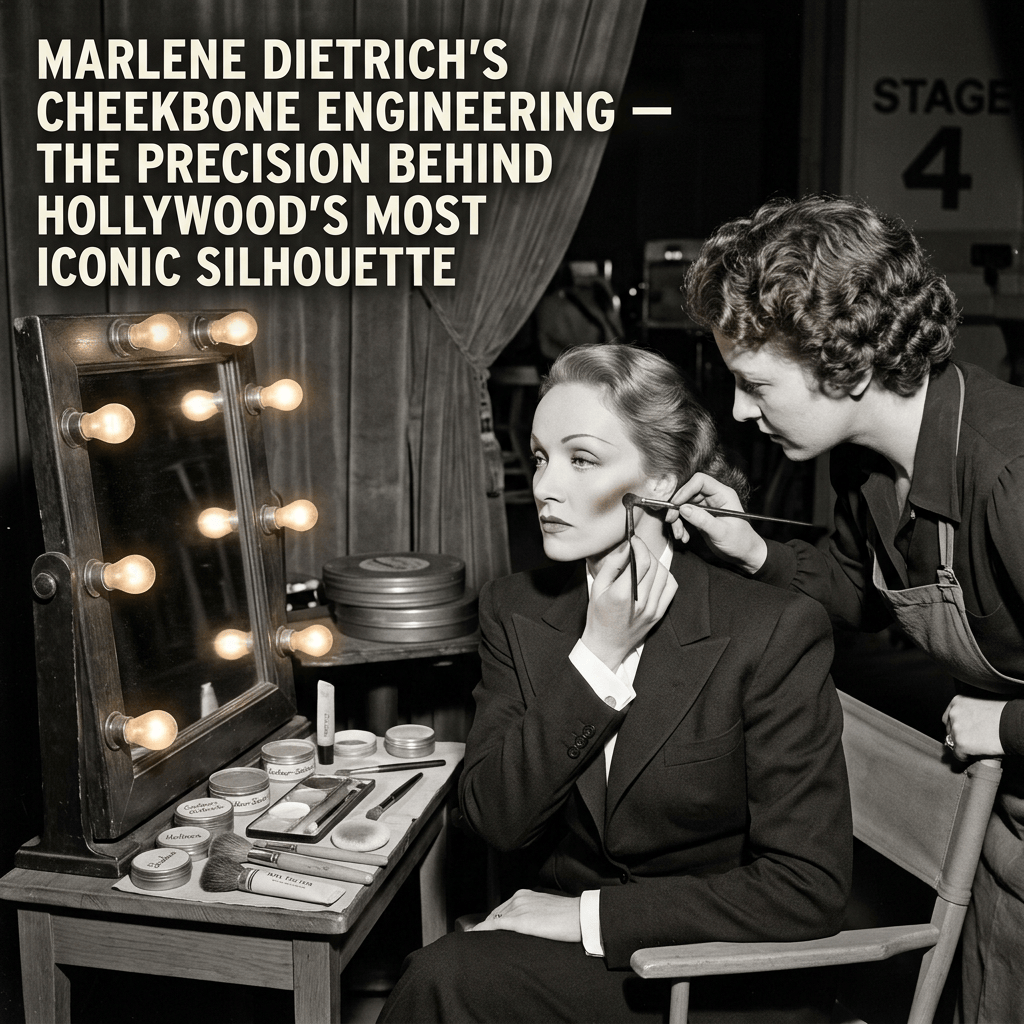
Her most famous trick was facial taping. Dietrich used small, strategic pieces of tape placed near the temples and hairline to pull the skin upward, creating a lifted, sculpted effect long before cosmetic procedures existed. Under wigs or carefully styled hair, the tape remained invisible, leaving only the illusion of impossibly sharp bone structure.
Shading was her second weapon. Dietrich mastered early contouring, applying darker powder beneath the cheekbones and lighter tones above them. This wasn’t makeup artistry as we know it today — it was innovation. She understood how monochrome film responded to shadow, and she used that knowledge to carve her face with intention.
Lighting was her final, and perhaps most powerful, tool. Dietrich collaborated closely with cinematographers, insisting on specific angles, diffusions, and intensities. She knew exactly how light should strike her cheekbones to create the dramatic, sculpted look that became her signature. Her demands weren’t diva behaviour; they were strategy.
Dietrich’s cheekbone engineering wasn’t vanity — it was craft. A fusion of discipline, creativity, and technical understanding that shaped her legacy. She didn’t rely on genetics. She built her face for the camera, one tape, one shadow, one beam of light at a time.

