Sensitive skin and reactive skin are often confused, but they behave differently — and understanding the distinction helps readers choose the right routines, ingredients, and expectations.
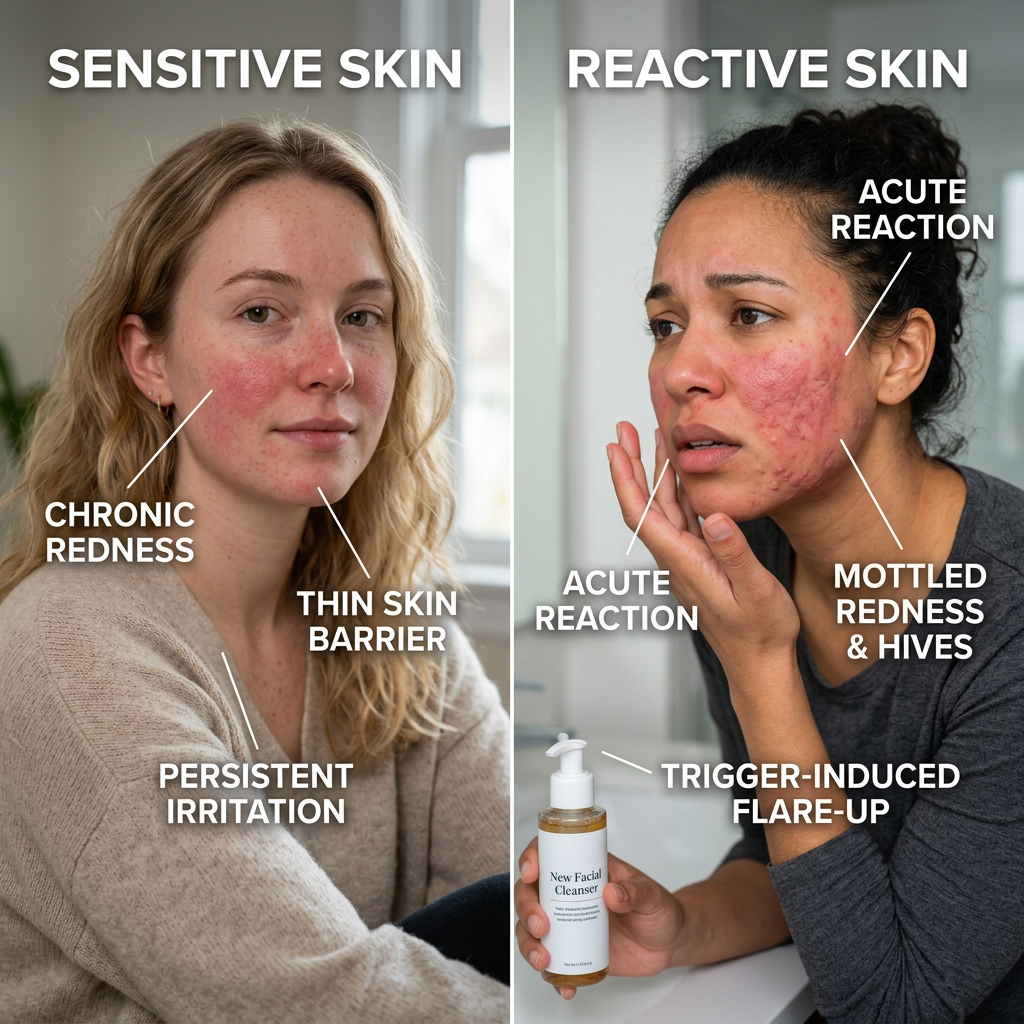
Sensitive Skin
Sensitive skin is a skin behaviour rooted in barrier weakness. It reacts easily because its protective layer is thin, compromised, or genetically delicate.
Key Traits
- Consistent, predictable triggers
- Redness, stinging, tightness
- Reacts to fragrance, essential oils, harsh cleansers
- Weather changes worsen symptoms
- Often linked to genetics or long‑term barrier damage
What’s Happening
The barrier can’t hold moisture or block irritants effectively. Even gentle products may feel harsh because the skin lacks protection.
How It Feels
Sensitive skin is always a bit on edge — it doesn’t take much to set it off.
Reactive Skin
Reactive skin is situational and overstimulated, often caused by lifestyle, stress, or overuse of strong products. It’s not a skin type — it’s a temporary state.
Key Traits
- Sudden flare‑ups
- Burning, flushing, “hot skin” sensation
- Reacts to almost anything when triggered
- Often caused by over‑exfoliation, retinoids, stress, or climate extremes
- Can happen to any skin type (even oily or resilient skin)
What’s Happening
The skin is inflamed and overwhelmed. The barrier may be damaged, but the reactivity is heightened, unpredictable, and often short‑term.
How It Feels
Reactive skin goes from fine to inflamed quickly — it’s dramatic, fast, and intense.
The Core Difference
Sensitive skin is consistent. Reactive skin is chaotic.
Sensitive skin needs gentle, long‑term barrier support. Reactive skin needs immediate calming and a break from actives.

