Dry skin is a skin type that naturally produces less oil (sebum) than it needs to keep the skin comfortable, protected and flexible. Because there is less natural oil, the skin can struggle to lock in moisture and maintain a strong protective barrier.
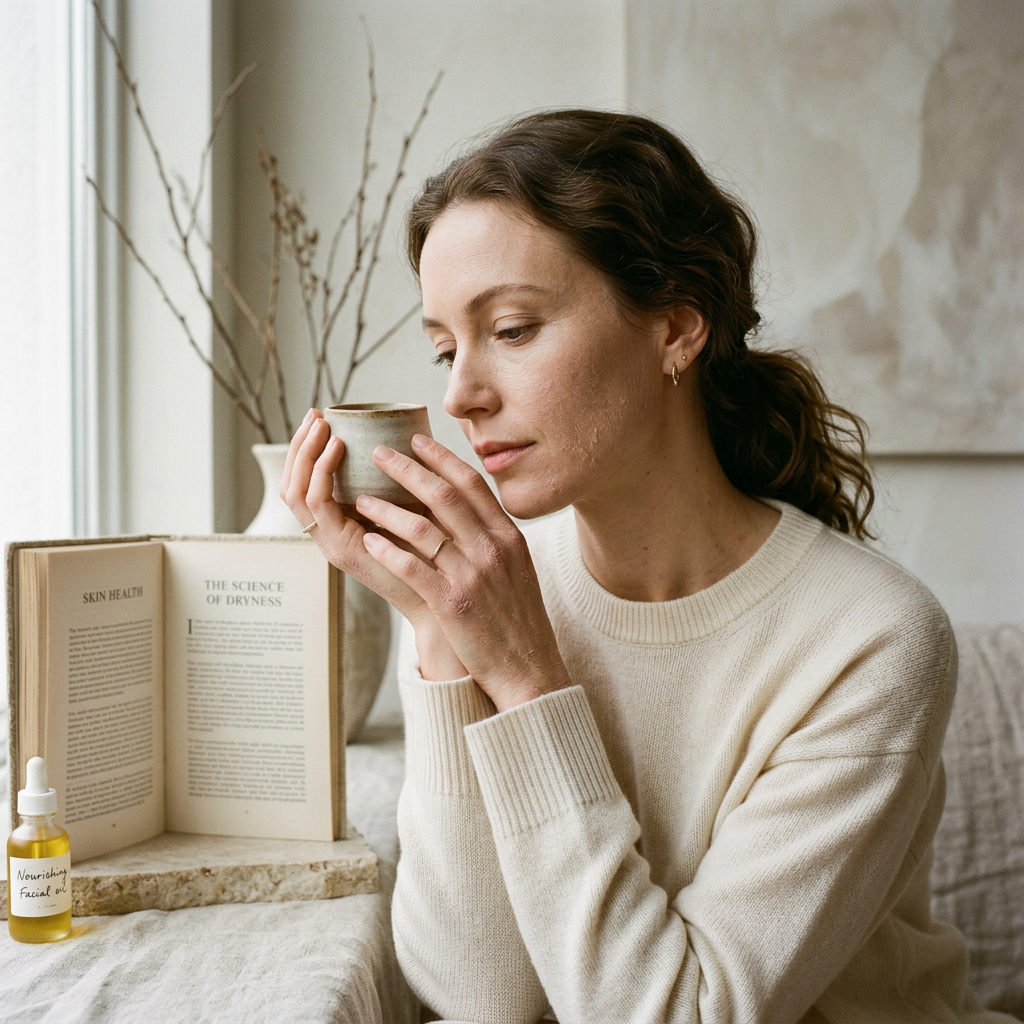
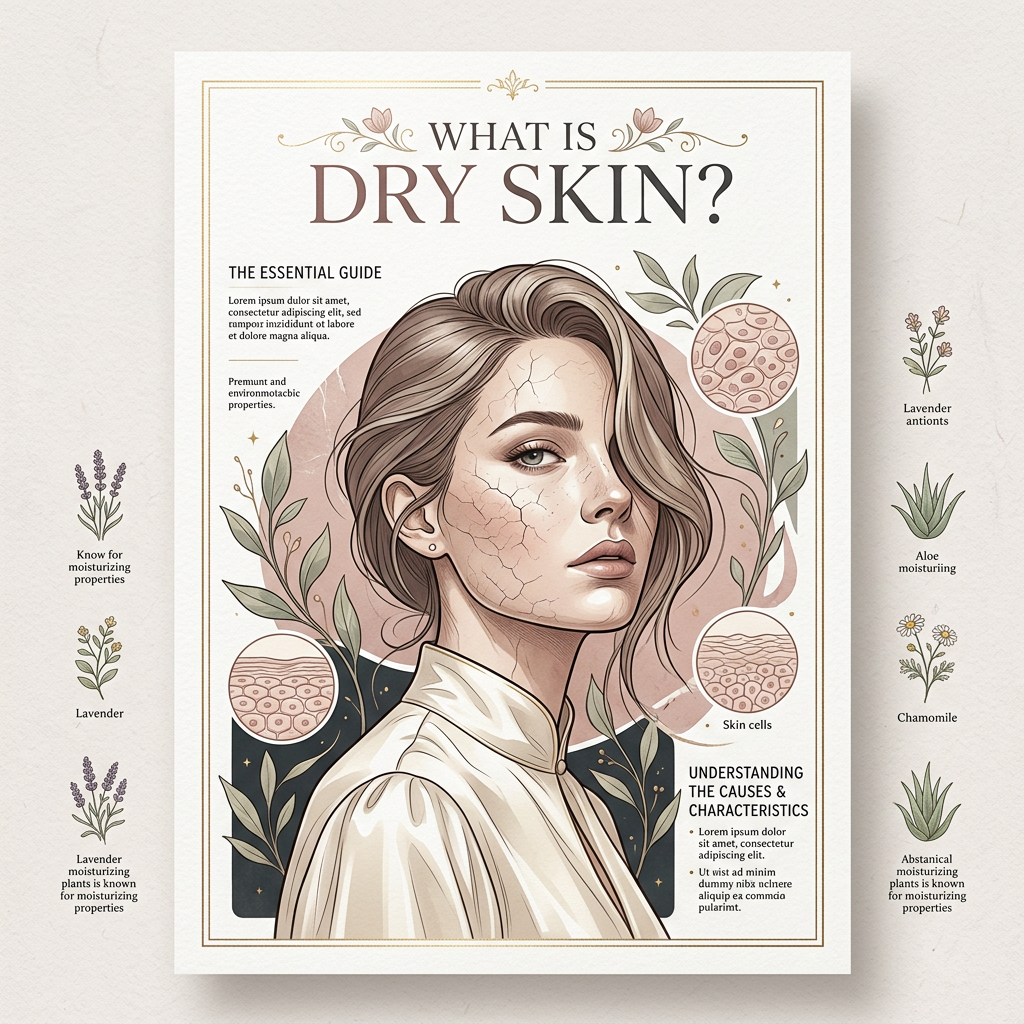
Unlike dehydrated skin, which lacks water, dry skin lacks oil.
Signs of Dry Skin
- Tightness throughout the day
- Rough or flaky patches
- Dull appearance
- Fine lines that appear more noticeable
- Skin that feels uncomfortable after cleansing
- Itching or irritation
- A complexion that rarely becomes oily
Dry skin often feels dry year-round, not just during certain seasons.
What Causes Dry Skin?
Genetics
For many people, dry skin is inherited. Their sebaceous glands naturally produce less oil than other skin types.
Ageing
As we age, oil production gradually decreases, making dryness more common over time.
Environmental Factors
- Cold weather
- Low humidity
- Indoor heating
- Wind exposure
- Frequent sun exposure
These conditions can worsen existing dryness.
Lifestyle Factors
- Hot showers or baths
- Harsh cleansers
- Over-exfoliation
- Smoking
- Inadequate hydration and nutrition
These habits can weaken the skin barrier and make dry skin feel even drier.
What Dry Skin Needs
- Gentle, non-stripping cleansers
- Richer moisturizers
- Ceramides and fatty acids
- Squalane and nourishing oils
- Consistent sunscreen
- Minimal over-exfoliation
Dry Skin vs. Dehydrated Skin
Dry Skin = Lacks Oil
Dehydrated Skin = Lacks Water
It’s possible to have:
- Dry skin that is also dehydrated
- Oily skin that is dehydrated
- Normal skin that becomes temporarily dehydrated
The Good News
Dry skin can thrive with the right routine. By focusing on barrier repair, nourishment, and moisture retention, dry skin can become soft, comfortable, and radiant.
The easiest way to think about it? Dry skin is born with less oil, while dehydrated skin temporarily loses water.

