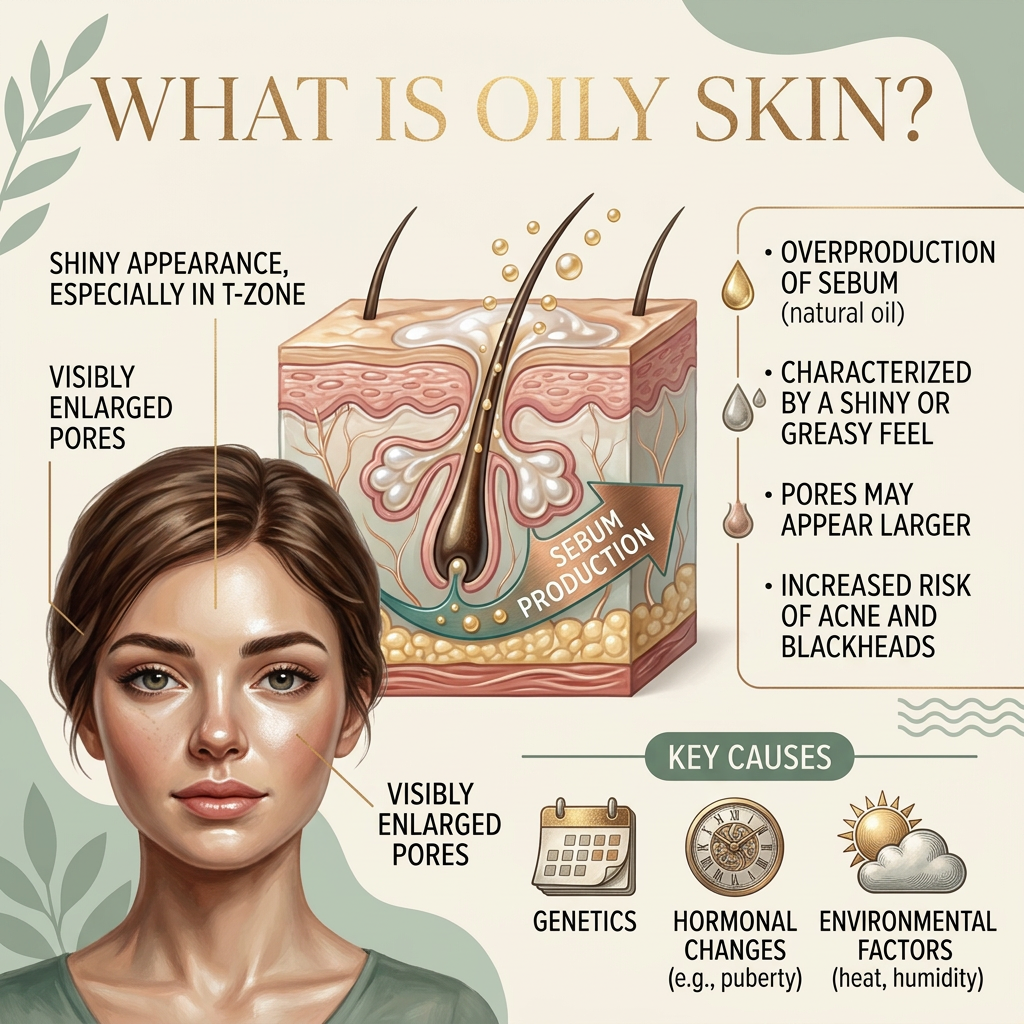
Oily skin is a skin type that produces more sebum (oil) than the skin needs to keep itself moisturized and protected. Sebum is naturally produced by the sebaceous glands and plays an important role in maintaining a healthy skin barrier. However, when oil production is excessive, the skin can appear shiny and become more prone to congestion and breakouts.
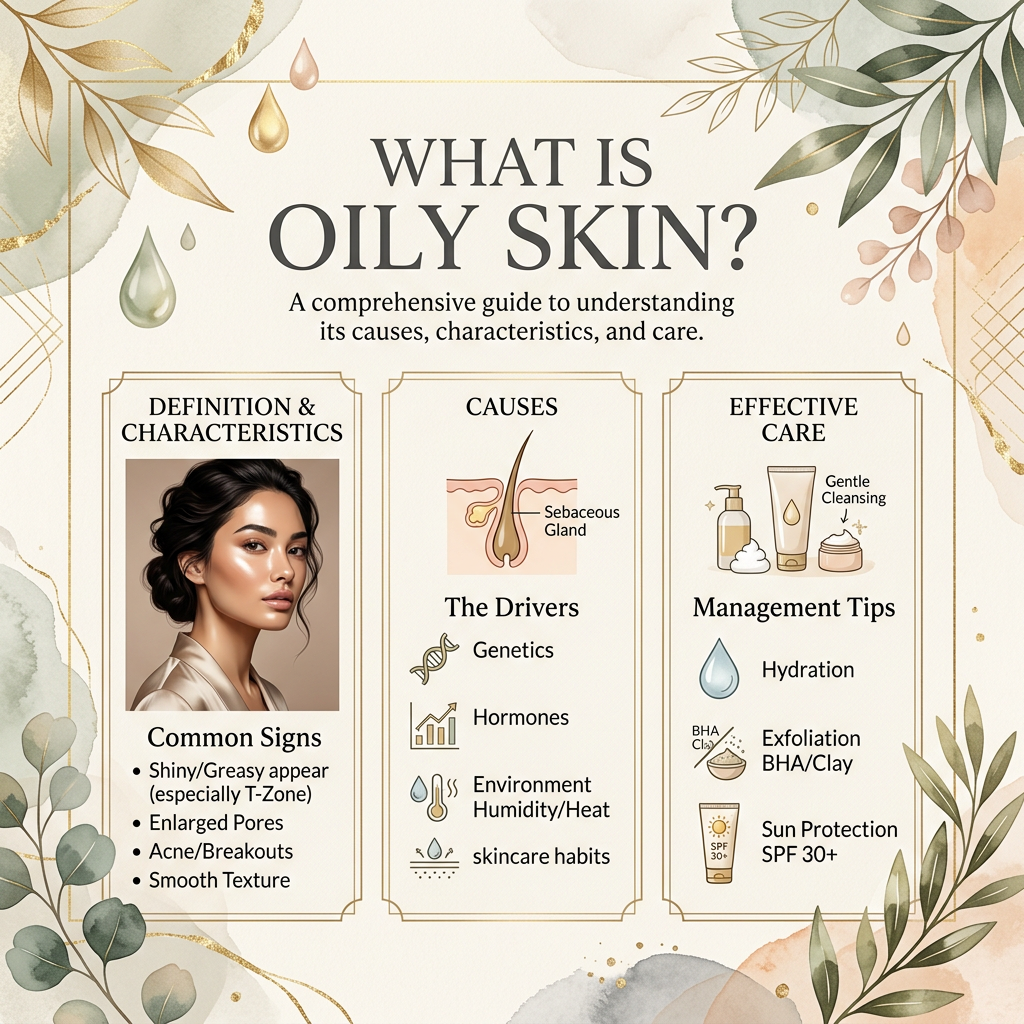
Signs of Oily Skin
- Noticeable shine, especially in the T-zone (forehead, nose, and chin)
- Enlarged or more visible pores
- Frequent blackheads and clogged pores
- Makeup that slides off or breaks down quickly
- Regular breakouts or blemishes
- Skin that feels greasy by midday
Many people with oily skin wake up with a shiny complexion or notice oil returning shortly after cleansing.
What Causes Oily Skin?
Genetics
The biggest factor is heredity. If oily skin runs in your family, you’re more likely to experience it as well.
Hormones
Hormonal fluctuations can increase oil production, particularly during:
- Puberty
- Pregnancy
- Menopause
- Times of heightened stress
Climate
Hot, humid weather often increases oil production and surface shine.
Over-Cleansing
Ironically, stripping the skin with harsh cleansers can cause it to produce even more oil in an attempt to compensate.
Using the Wrong Products
Heavy, pore-clogging products can make oily skin feel greasier and contribute to congestion.
What Oily Skin Needs
- Gentle cleansing, not harsh scrubbing
- Lightweight hydration
- Non-comedogenic moisturizers
- Consistent sunscreen
- Balanced exfoliation (not over-exfoliation)
A Common Misconception
Oily skin is not the same as hydrated skin. In fact, oily skin can become dehydrated, leading to the common “oily but tight” feeling. When skin lacks water, it may produce even more oil to compensate.
The Good News
Oily skin often ages more slowly than drier skin types because its natural oil helps maintain moisture and flexibility. The goal isn’t to eliminate oil entirely, but to keep it balanced and healthy.
The easiest way to think about it? Oily skin doesn’t produce too much moisture — it produces too much oil.