The Beauty Industry Under the Microscope
Walk through any beauty aisle today and you’ll encounter the same phrase over and over again: barrier repair.
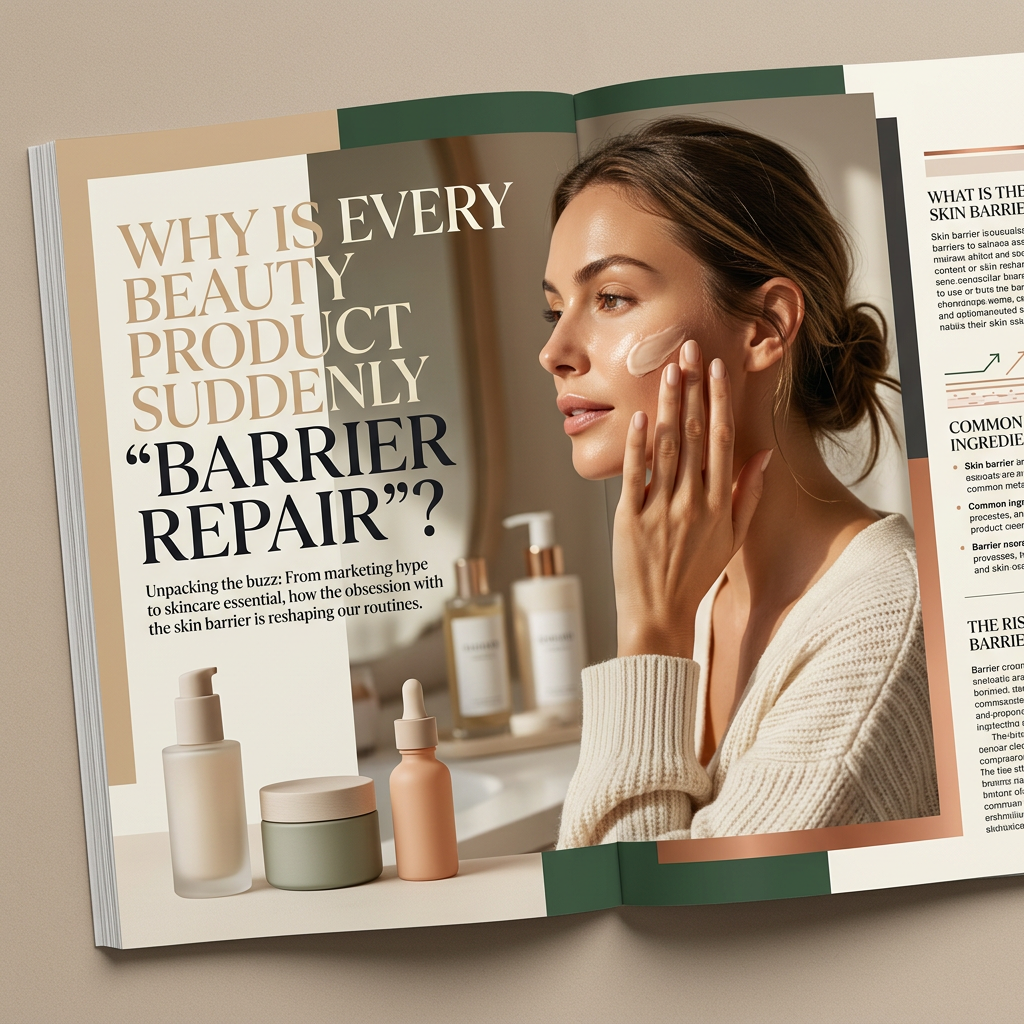
Barrier-repair moisturizers. Barrier-repair serums. Barrier-repair masks. Barrier-repair cleansers.
At first glance, you might assume the beauty industry has recently discovered the skin barrier. In reality, the skin barrier has always existed. What’s changed is the conversation around it.
A few years ago, skincare marketing often focused on correction. Consumers were encouraged to exfoliate, resurface, peel, scrub, and renew. The promise was brighter, smoother, younger-looking skin. Many routines became increasingly focused on acids, retinoids, and active ingredients.
Then something interesting happened.
Consumers became more ingredient-literate. They learned the difference between hydrated and dehydrated skin. They learned about irritation, redness, and sensitivity. They learned that it was possible to use too many products, too frequently.
Suddenly, the beauty industry began speaking a different language.
Instead of asking how quickly skin could be transformed, brands began asking how well it could be protected.
Today, barrier repair has become one of skincare’s most powerful marketing terms. Consumers increasingly associate a healthy skin barrier with comfort, resilience, hydration, and long-term skin health. The result is a surge of products promising to strengthen, support, restore, or repair it.
But this raises an interesting question.
Are we witnessing a genuine shift in skincare philosophy, or has barrier repair simply become the industry’s latest favourite buzzword?
The answer may be a little of both.
There is legitimate science behind maintaining a healthy skin barrier. When the barrier functions properly, it helps retain moisture and protect the skin from environmental stressors. For many people, supporting the skin barrier can be beneficial, particularly after over-exfoliation or irritation.
At the same time, not every product carrying a barrier-repair label is necessarily revolutionary.
In some cases, familiar ingredients have simply been repackaged with modern terminology. Moisturizers containing ceramides, fatty acids, and humectants have existed for years. What has changed is how these products are being positioned and marketed.
Perhaps the real story isn’t the rise of barrier repair itself.
Perhaps the real story is what this trend says about consumers.
After years of complicated routines and endless active ingredients, many people appear to be seeking something surprisingly simple: healthy, comfortable skin.
And in an industry often obsessed with transformation, that may be the most interesting trend of all.

