Long before Hollywood glamour became synonymous with flawless complexions and red-carpet beauty, Charlie Chaplin was helping shape the film industry itself. While he is best remembered for his iconic character, “The Tramp,” Chaplin also played a role in the early adoption of motion-picture makeup developed by Max Factor. Early users of Factor’s revolutionary flexible greasepaint included Chaplin, whose endorsement helped establish the product as a new standard in silent-film makeup.
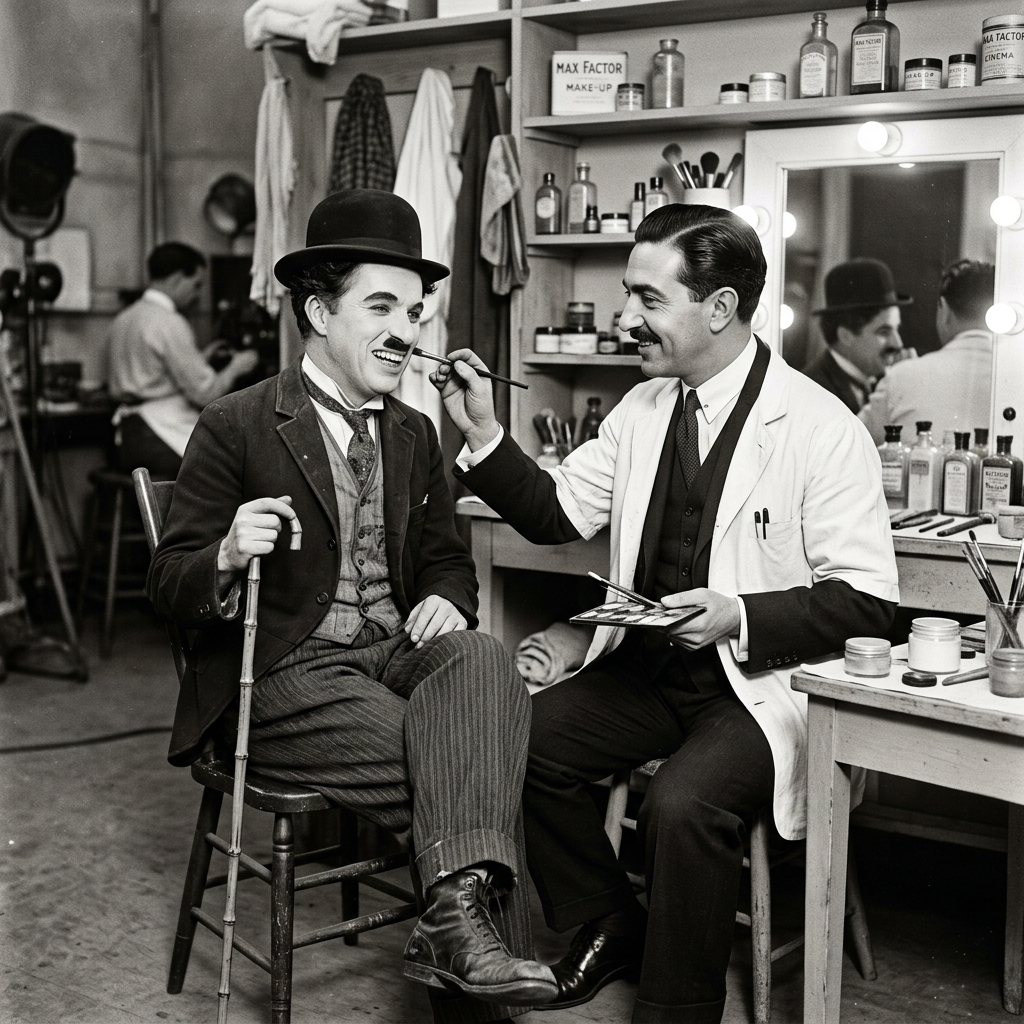
At the beginning of the twentieth century, actors often relied on theatrical greasepaint designed for stage performances. Under the scrutiny of film cameras, however, these products appeared heavy, cracked easily, and looked unnatural in close-ups. Recognizing the problem, Max Factor introduced a more flexible greasepaint formulated specifically for motion pictures. The new product could be applied in thinner layers and moved naturally with facial expressions, making it ideal for performers whose faces carried much of the storytelling.
For Chaplin, facial expression was everything. His ability to communicate emotion through subtle movements made makeup performance-critical. A cosmetic product that remained believable on camera while allowing freedom of expression was a major advancement for silent-film actors. Factor’s innovations helped support this new era of screen acting.
What makes Chaplin’s connection to Max Factor so important is that it highlights the origins of Hollywood makeup. Before beauty transformations, glamour campaigns, and signature star looks, there was the challenge of simply making actors appear natural on screen. Chaplin was among the performers who helped prove that Max Factor’s innovations could meet that challenge.
Source Note
Historical accounts identify Charlie Chaplin as one of the early film stars who adopted Max Factor’s flexible greasepaint, helping establish it as the standard makeup of the silent-film era.

