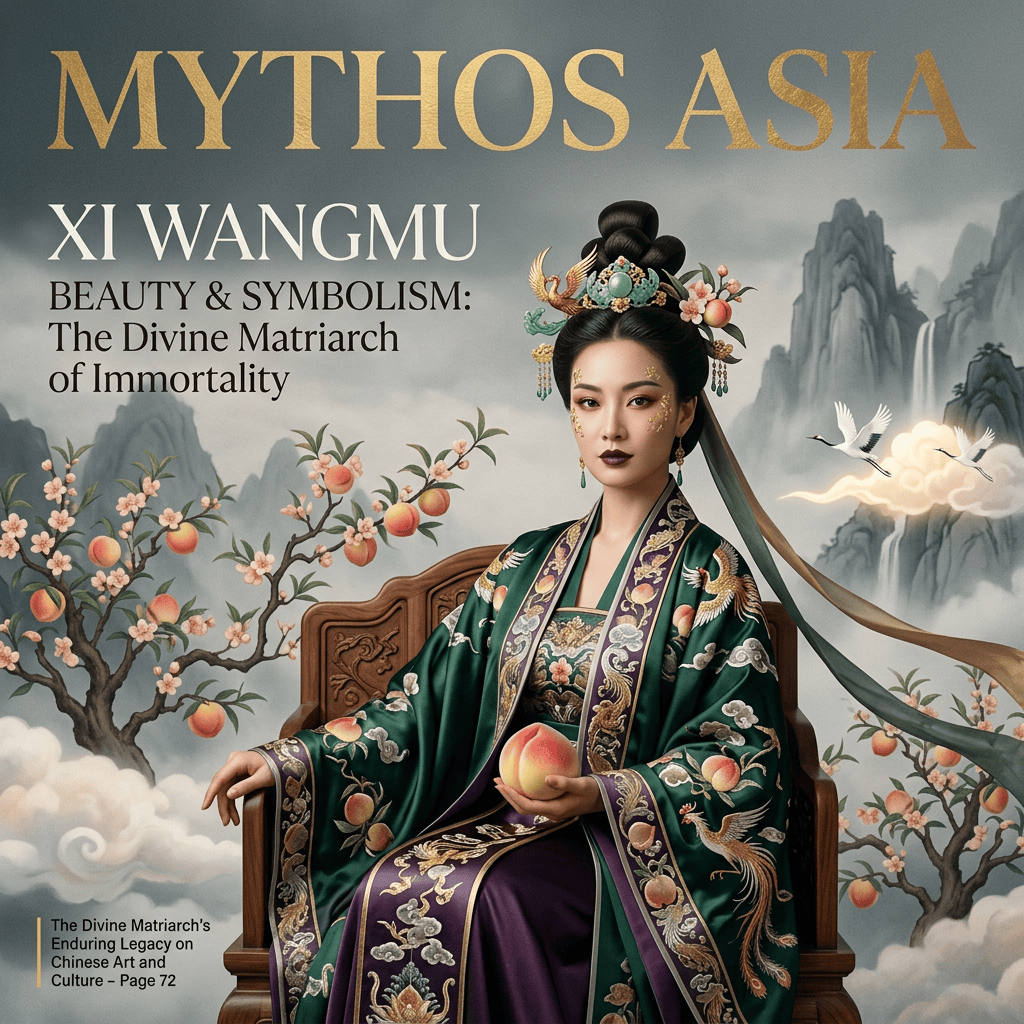
Xi Wangmu — the Queen Mother of the West — is one of the most powerful and visually rich figures in Ancient Chinese mythology. Her beauty symbolism shaped ideals of femininity, elegance, and cosmic authority for centuries. She wasn’t a gentle goddess; she embodied strength, transformation and the promise of immortality.
Her most famous symbol is the Peach of Immortality, a fruit said to ripen only once every few thousand years. These peaches represented eternal youth, radiant skin, and divine vitality. Women invoked Xi Wangmu through peach‑infused balms, floral fragrances, and hair adornments meant to echo her celestial orchard.
Xi Wangmu’s imagery also influenced beauty adornment. Hairpins decorated with phoenixes, peaches, or cloud motifs were worn to channel her protective power. These accessories weren’t just decorative — they symbolized longevity, feminine authority, and cosmic balance.
Her connection to the Kunlun Mountains, a mythical realm of purity and transcendence, reinforced ideals of clear skin, luminous eyes, and harmonious features. Beauty aligned with spiritual elevation.
Fragrance played a role too. Incense blends inspired by her legends — often featuring lotus, sandalwood, or plum blossom — were used in rituals to honour her presence and invite clarity, protection, and renewal.
Xi Wangmu’s beauty symbolism reveals a culture where femininity was powerful, mystical, and deeply tied to nature. She wasn’t simply a goddess of beauty — she was a guardian of transformation.
I’m Stacey Hobbs, thanks for reading Face by Stace! Until next time.
do you feel fabulous today?

