One of the biggest differences between consumer makeup application and professional makeup artistry often comes down to the tools.
Back in the day, one of the first things I learned as a professional makeup artist was to keep my fingers out of my products whenever possible. Surprised? Don’t be. There is actually a very good reason for it.
When people apply makeup with their fingers, oils are constantly being transferred from the hands to the makeup products and then onto the face. The challenge is that not all skin is the same. The skin on the forehead differs from the skin on the nose. The cheeks differ from the jawline. The skin underneath the eyes is the thinnest and most delicate area of the face, requiring a gentler touch than other areas.
Then there are the oils.
Different areas of the face can produce different amounts of oil, creating a variety of challenges when it comes to makeup application. Men’s skin presents its own considerations as well, often being thicker overall than women’s skin while still varying in texture and thickness depending on the area of the face.
What Caught My Attention
What caught my attention throughout my career is how quickly transferring oils can impact makeup performance. When oils from the fingers are mixed with products, those oils eventually make their way onto the face. Add natural skin oils into the equation and suddenly you have a lot happening beneath the makeup.
The result?
Separation.
Sliding.
Melting.
Fading.
In other words, the dreaded slip-and-slide scenario.
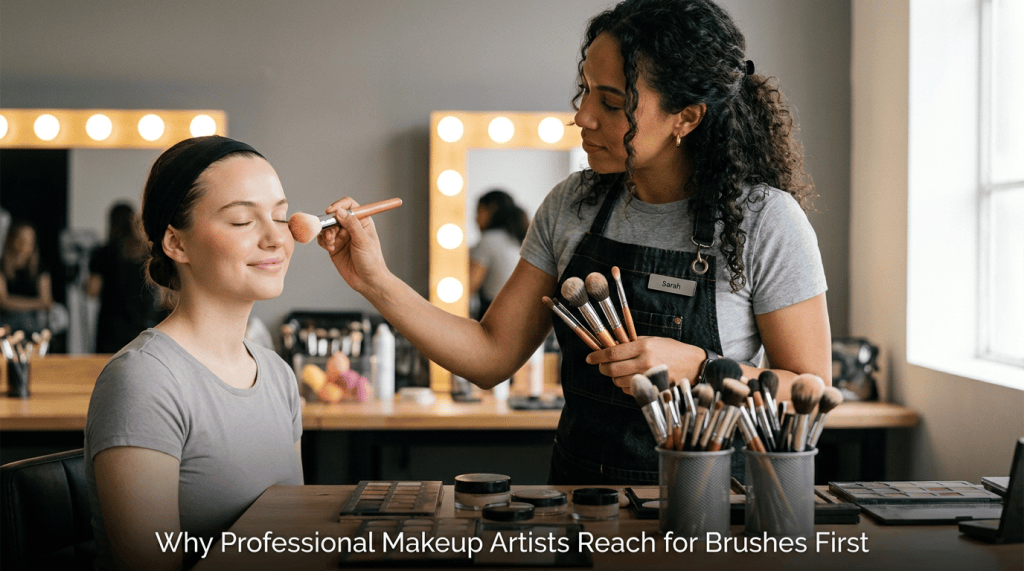
This is one reason professional makeup artists rely on tools. Brushes, palettes, spatulas, and sponges help create a barrier between products and unnecessary contamination while allowing greater control over the application.
Now, there are exceptions.
Cream-based products often benefit from a little warmth before application. In those cases, the back of the hand has traditionally been used to warm and soften the product. That’s very different from repeatedly dipping fingers directly into products.
Another unsung hero of the makeup kit? The humble white wedge sponge.
Back in the day, many makeup artists viewed it as a makeup eraser. Applied too much product? The sponge helped blend, soften, and remove excess makeup without disturbing the entire application.
Professional makeup artistry has always been about control. Control of colour. Control of texture. Control of application. And yes, control of hygiene.
Beautiful makeup starts long before the first brush touches the face.
Have you ever wondered why professional makeup artists rely so heavily on brushes and tools? Please let me know, I’d love to hear from you!
Do you feel fabulous today?
The beauty world stopped asking for permission and started having fun.

