Today, it is easy to forget that makeup and film technology have always been connected.
Yet one of the biggest beauty innovations of the 1930s did not come from a lipstick, mascara or face cream. It came from the movie industry.
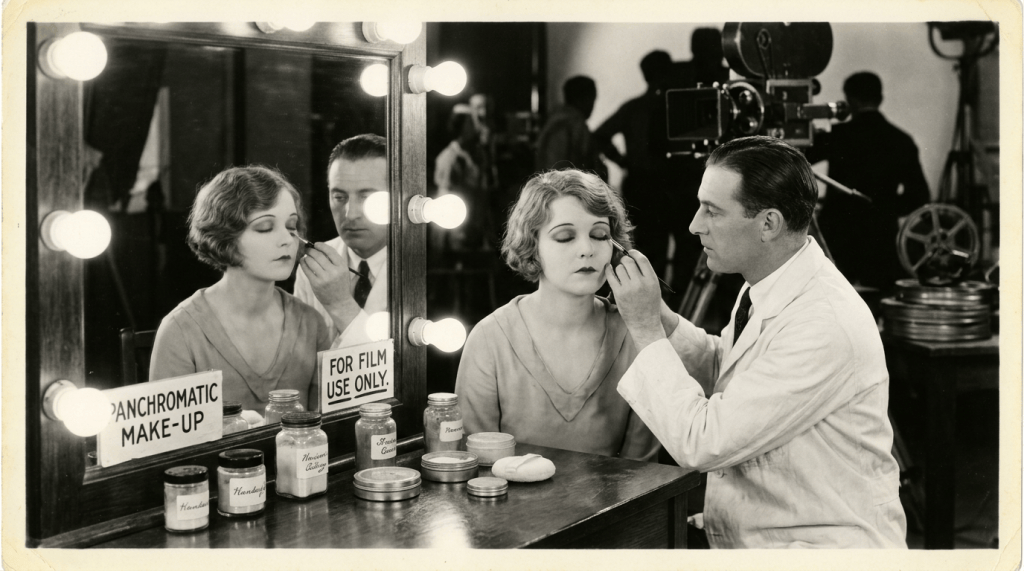
As panchromatic film became more widely adopted, Hollywood makeup artists found themselves facing an unexpected challenge. Earlier film stock required heavy, often unnatural-looking makeup to register facial features properly on camera. Panchromatic film was capable of capturing a wider range of tones and details, which meant traditional makeup formulas no longer performed the way they once had.
Suddenly, makeup needed to evolve.
Heavy theatrical greasepaint began giving way to lighter, more refined formulas that appeared more natural on screen. This shift helped create the glamorous Hollywood look associated with stars such as Greta Garbo, Jean Harlow, and Marlene Dietrich.
The impact extended far beyond movie sets. As audiences admired the beauty of Hollywood’s leading stars, cosmetic companies began developing products inspired by these new screen-ready looks. The result was a beauty industry that became increasingly influenced by film technology and cinematic glamour.
What makes panchromatic film particularly fascinating is that it helped transform makeup from a theatrical necessity into a more refined and sophisticated art form.
In many ways, modern makeup owes a great deal to a camera.
Have you ever wondered how Hollywood helped shape the beauty industry? Please let me know, I’d love to hear from you!
Do you feel fabulous today?

