There are classics and then there are the classic books that became the backbone of Old Hollywood’s Golden Age. I love reading the novels afterwatching their iconic film adaptations, because it feels like peeling back the glamour to see the original blueprint. Stories like Double Indemnity, The Thin Man, and The Maltese Falcon began as sharp, stylish pieces of literature long before they became beloved films. Revisiting the books adds a new dimension: you see the characters as they were first imagined, the dialogue before it was immortalized, and the mood before Hollywood dressed it in satin, smoke, and studio lighting.
Rebecca — Daphne du Maurier (1938)

A gothic psychological novel about identity, jealousy and the haunting presence of the past. The un-named narrator enters Manderley as a new bride, only to find herself overshadowed by the spectral perfection of Rebecca — the first Mrs. de Winter. Du Maurier blends romance with dread, crafting a story where atmosphere becomes a character and memory becomes a weapon.
Genre: Gothic fiction, psychological suspense
Reputation: Universally acclaimed; considered one of the greatest gothic novels of the 20th century.
- Film Adaptation: Rebecca (1940)
- Director: Alfred Hitchcock
- Stars: Joan Fontaine, Laurence Olivier
- Notes: Hitchcock’s first American film; won the Academy Award for Best Picture.
The Postman Always Rings Twice — James M. Cain (1934)

A lean, brutal noir about desire, betrayal and the consequences of impulsive passion. Cain’s prose is stripped to the bone, capturing the dangerous chemistry between drifter Frank Chambers and the restless Cora. Their affair spirals into violence, exposing the raw, animalistic side of human nature.
Genre: Hardboiled noir, crime fiction
Reputation: A noir classic; influential, gritty, still widely studied
- Film Adaptation: The Postman Always Rings Twice (1946)
- Director: Tay Garnett
- Stars: Lana Turner, John Garfield
- Notes: One of the most iconic femme‑fatale performances in noir history.
Jamaica Inn — Daphne du Maurier (1936)

Set on the windswept moors of Cornwall, this novel follows Mary Yellan as she uncovers the criminal underbelly of the inn run by her sinister uncle. It’s a story of smuggling, secrecy, and moral ambiguity — a gothic adventure steeped in fog, fear, and du Maurier’s signature tension.
Genre: Gothic adventure, crime
Reputation: Dark, atmospheric; not as famous as Rebecca but still highly regarded.
- Film Adaptation: Jamaica Inn(1939)
- Director: Alfred Hitchcock
- Stars: Charles Laughton, Maureen O’Hara
- Notes: Hitchcock’s final British film before moving to Hollywood.

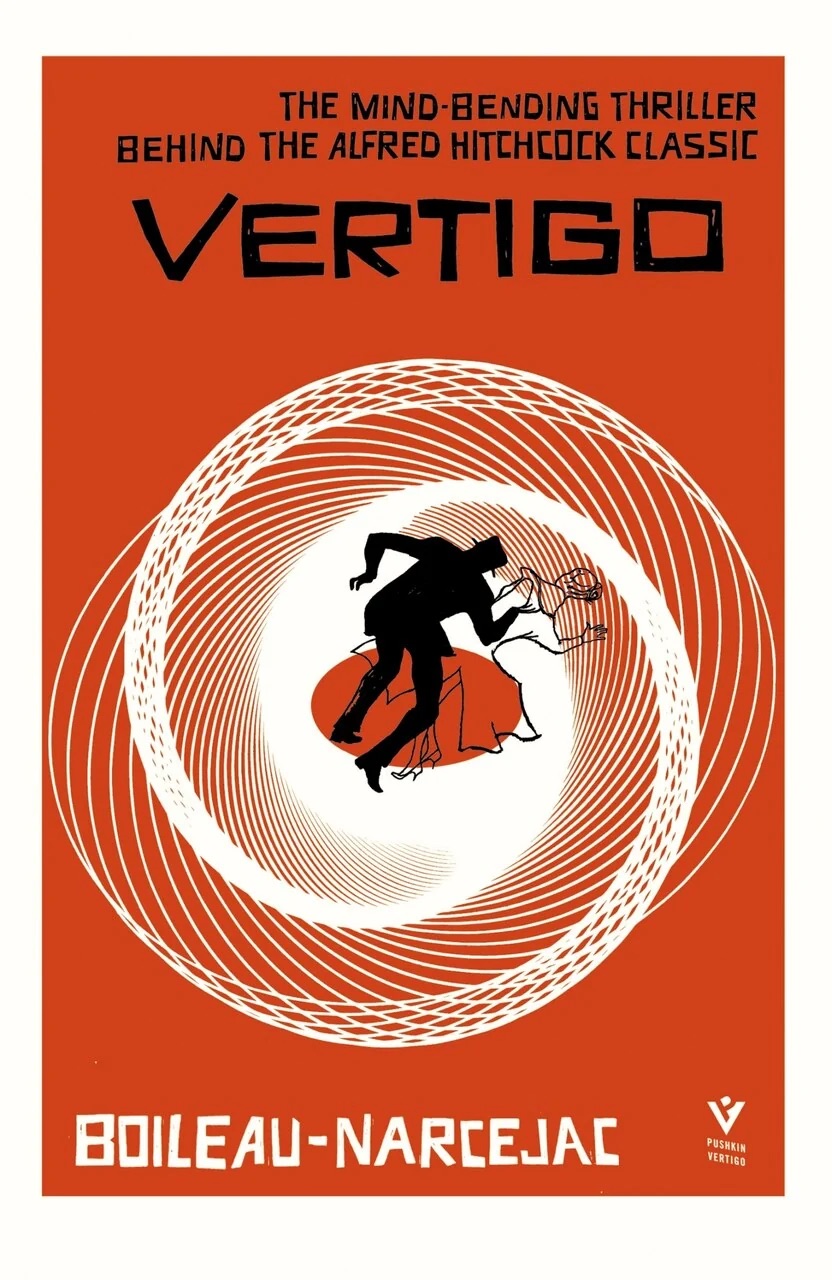
D’entre les morts (The Living and the Dead) — Boileau-Narcejac (1954)
The novel behind Vertigo, it’s a psychological thriller about obsession, identity, and the collapse of reality. A man becomes fixated on a woman who seems to be slipping between life and death, pulling him into a spiral where love becomes delusion and memory becomes a trap.
Genre: Psychological thriller
Reputation: Critically respected; the film adaptation is considered one of the greatest films ever made.
Vertigo — based on D’entre les morts (1954) by Boileau-Narcejac
- Film Adaptation: Vertigo (1958)
- Director: Alfred Hitchcock
- Stars: James Stewart, Kim Novak
- Notes: Considered one of the greatest films ever made; psychological noir at its peak.
In a Lonely Place — Dorothy B. Hughes (1947)

A chilling noir told from the perspective of a man whose charm masks a predatory darkness. Hughes’ novel is sharper and more sinister than its film adaptation — a study of misogyny, violence, and the terrifying banality of evil. It’s one of the most psychologically sophisticated noirs of its era.
Genre: Noir, psychological crime
Reputation: A masterpiece of psychological noir; the novel is darker and more complex than the film.
- Film Adaptation: In a Lonely Place(1950)
- Director: Nicholas Ray
- Stars: Humphrey Bogart, Gloria Grahame
- Notes: A darker, more tragic interpretation than the novel; essential noir.
For Whom the Bell Tolls — Ernest Hemingway (1940)

A sweeping wartime novel set during the Spanish Civil War, following American dynamiter Robert Jordan. Hemingway blends political conflict with intimate human connection, exploring courage, sacrifice, and the fragility of love in the face of brutality. It’s one of his most emotionally resonant works.
Genre: Literary fiction, war novel
Reputation: One of Hemingway’s most celebrated works; Pulitzer finalist.
- Film Adaptation: For Whom the Bell Tolls (1943)
- Director: Sam Wood
- Stars: Gary Cooper, Ingrid Bergman
- Notes: Bergman’s performance helped cement her Hollywood ascent.
The Maltese Falcon — Dashiell Hammett (1930)

A hardboiled detective classic that defined the genre. Sam Spade navigates a labyrinth of lies, greed, and double‑crosses as he hunts for a legendary jewel-encrusted falcon. Hammett’s clipped dialogue and moral ambiguity shaped the entire future of noir storytelling.
Genre: Hardboiled detective fiction
Reputation: Foundational to American noir; widely considered essential reading.
- Film Adaptation: The Maltese Falcon (1941)
- Director: John Huston
- Stars: Humphrey Bogart, Mary Astor
- Notes: The blueprint for American film noir; Huston’s directorial debut.
To Have and Have Not — Ernest Hemingway (1937)

A gritty tale of economic desperation in Key West, following fishing boat captain Harry Morgan as he’s pushed into smuggling. Hemingway explores class tension, survival, and the moral compromises people make when cornered. The novel is darker and more political than its glamorous film adaptation.
Genre: Literary fiction, social realism
Reputation: Mixed reviews; admired for its grit but not Hemingway’s strongest.
- Film Adaptation: To Have and Have Not (1944)
- Director: Howard Hawks
- Stars: Humphrey Bogart, Lauren Bacall
- Notes: Famous for launching Bogart’s & Bacall’s legendary on‑screen and off‑screen chemistry.
The Thin Man — Dashiell Hammett (1934)

A witty, urbane detective novel featuring retired sleuth Nick Charles and his glamorous wife Nora. It’s equal parts mystery and sparkling banter — a portrait of 1930s sophistication, cocktail culture, and effortless marital chemistry. Hammett’s final novel, and one of his most charming.
Genre: Detective fiction, comedy‑mystery
Reputation: Beloved for its wit and charm; lighter than Hammett’s other works.
- Film Adaptation: The Thin Man(1934)
- Director: W. S. Van Dyke
- Stars: William Powell, Myrna Loy
- Notes: Sparked a beloved franchise; witty, urbane and foundational to detective comedy. The first and one of the best cinema franchises of all-time.
Dark Passage
David Goodis’s Dark Passage is a moody, psychologically charged noir about Vincent Parry, a man wrongfully convicted of murdering his wife who escapes San Quentin and undergoes an illicit surgical transformation to hide his identity while hunting for the truth. Goodis blends paranoia, longing, and urban dread into a story where San Francisco becomes a maze of shadows, betrayals, and fragile hope. The 1947 film adaptation starring Humphrey Bogart and Lauren Bacall famously uses extended first‑person camera work to mirror Parry’s disorientation, turning the novel’s internal tension into one of the most stylistically daring Golden Age noirs.
Book: Dark Passage (1946) — David Goodis
A noir novel about a man wrongly accused of murder who undergoes drastic measures to clear his name. Goodis writes with melancholy, grit, and emotional depth.
Film: Dark Passage (1947)
Starring Humphrey Bogart & Lauren Bacall
Famous for its first-person camera technique; moody, stylish, and quintessentially noir.
The Big Sleep
Raymond Chandler’s The Big Sleep is the quintessential hard‑boiled noir, introducing private detective Philip Marlowe as he navigates the decadent, dangerous underworld of Los Angeles while investigating a wealthy family’s tangled secrets. The novel’s labyrinthine plot — full of blackmail, corruption, hidden desires and moral ambiguity — is less about solving a mystery and more about descending into a city where everyone has something to hide. Chandler’s clipped, razor‑sharp prose and smoky atmosphere shaped the entire noir genre and the 1946 film adaptation starring Humphrey Bogart and Lauren Bacall transformed Marlowe into one of Hollywood’s most iconic detectives.
Book: The Big Sleep (1939) — Raymond Chandler
A labyrinthine detective novel introducing Philip Marlowe. Chandler’s prose is sharp, cynical, and poetic — the gold standard of noir.
Film: The Big Sleep (1946)
Starring Bogart & Bacall
Iconic chemistry, razor-sharp dialogue, and famously complex plotting.
Legacy: The novel introduced Philip Marlowe, Chandler’s iconic private detective and helped define the entire noir genre with its morally tangled plot, smoky atmosphere, and razor‑sharp dialogue.
Grand Hotel
Vicki Baum’s Grand Hotel is a glamorous, multi‑threaded ensemble drama set inside Berlin’s most luxurious hotel, where strangers’ lives briefly intersect in ways that expose both the glitter and the grit of interwar Europe. The novel follows a fading ballerina, a charming but desperate baron, a ruthless industrialist, a stenographer dreaming of a better life and a dying accountant determined to taste beauty before the end — each character carrying private longings into a shared public space. Baum’s sharp psychological insight and cinematic pacing made the story irresistible to Hollywood, inspiring the 1932 MGM classic starring Greta Garbo and Joan Crawford, which cemented the “multiple lives crossing in one glamorous location” structure as a Golden Age staple.
Book: Menschen im Hotel (1929) — Vicki Baum A novel weaving together the lives of strangers in a luxury hotel — glamour, tragedy, and human connection.
Film: Grand Hotel (1932)
Starring Greta Garbo & Joan Crawford
A prestige ensemble film; lush, elegant, and emotionally rich.
Legacy: The film popularized the “multiple storylines intersecting in one glamorous location” structure that later became a Hollywood staple.
To Catch a Thief
David Dodge’s To Catch a Thief is a breezy, sun‑drenched suspense novel set along the French Riviera, where retired jewel thief John Robie must clear his name after a new wave of burglaries mimics his old signature. The story blends glamour, danger, and flirtation as Robie navigates wealthy vacationers, suspicious police, and one particularly sharp‑eyed heiress who may be his undoing. Hitchcock’s 1955 adaptation, starring Cary Grant and Grace Kelly, transforms Dodge’s crisp thriller into a lush, Technicolour fantasy of Riviera elegance and romantic intrigue.
Original form: A novel
Author: David Dodge
Publication: 1952
Genre: Suspense / romantic thriller
Film adaptation: 1955 Alfred Hitchcock film starring Cary Grant and Grace Kelly
Legacy: The film’s Riviera glamour and Grant–Kelly chemistry made it one of Hitchcock’s most visually iconic works.
Breakfast at Tiffany’s
Truman Capote’s Breakfast at Tiffany’s is a shimmering novella about Holly Golightly, a New York socialite whose charm, contradictions, and fragile bravado make her one of literature’s most unforgettable creations. Told through the eyes of her neighbor, the story captures the melancholy beneath Holly’s glittering facade, a woman reinventing herself in a city that rewards beauty and punishes vulnerability. Blake Edwards’ 1961 film adaptation, starring Audrey Hepburn, softened Capote’s darker edges but immortalized Holly as a cultural icon of mid‑century glamour.
I’m Stacey Hobbs, thanks for reading Face by Stace! Until next time.
do you feel fabulous today?

