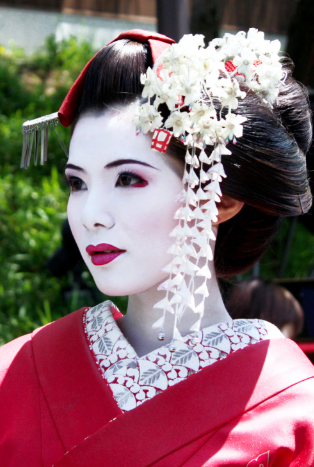
Geisha makeup is one of the most recognizable beauty traditions in the world, a ritual shaped by centuries of artistry, symbolism and performance. Its origins trace back to Japan’s Edo period (1603–1868), when entertainers, dancers and musicians developed a visual language that communicated status, skill and refinement.
The white face — oshiroi — was the foundation. Made originally from rice powder, it created a luminous, porcelain finish that stood out in candlelit teahouses. The whiteness symbolized purity, elegance,and the ideal of feminine beauty. It also acted as a visual canvas, allowing the eyes and lips to become expressive focal points.
The eyes were lined with charcoal or black pigment to create definition and drama. Over time, red accents were added around the eyes — a colour associated with youth, vitality and allure. These touches gave the face depth and emotion, essential for performers whose expressions needed to be visible from a distance.
The lips were painted in a small, stylized shape using safflower‑based red pigment. Apprentice geisha (maiko) wore only the lower lip painted, signaling their training status. Fully fledged geisha painted both lips, creating the iconic heart‑like shape that conveyed maturity and mastery.
Hair ornaments and kimono patterns completed the look, each chosen with precision. Every detail — colour, placement, shape — communicated age, rank, season and artistry. Geisha makeup was never just cosmetic; it was a coded language.
Today, geisha makeup remains a living tradition. It is practiced with the same discipline and reverence, preserving a beauty ritual that is both theatrical and deeply cultural — a testament to Japan’s enduring artistry.
Geisha makeup is not simply applied. It is performed.
I’m Stacey Hobbs, thanks for reading Face by Stace! Until next time.
do you feel fabulous today?

