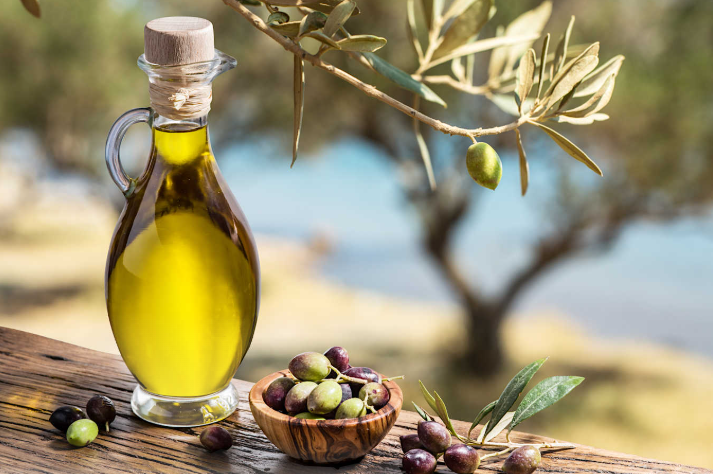
In the 1930s, beauty was shaped by restraint. Women lived through economic austerity, yet their grooming rituals remained tender, intentional and luxurious. Instead of beauty being purchased it was made at home, with ingredients pulled from the pantry rather than the department store. And few ingredients carried more cultural weight than olive oil.
Olive oil was one of beauty’s oldest luxuries: a Mediterranean staple used by Greek athletes, Roman empresses and Renaissance women who believed its golden richness symbolized vitality and longevity. By the 1930s, that lineage still mattered. Even in the midst of the Depression, olive oil remained a small, accessible indulgence — a way for women to maintain softness, shine and dignity when everything else felt uncertain.
Why Olive Oil?
Hair in the 1930s endured constant stress:
- daily brushing
- pin curls
- Marcel waves
- heated irons
- setting lotions
- rigid styles that demanded control
Split ends were inevitable.
Olive oil became the era’s answer — a kitchen‑table treatment that softened brittle ends, restored sheen and protected hair from the harshness of styling tools. Women warmed a teaspoon between their palms and smoothed it through the last two inches of their hair, letting it sit while they prepared supper or folded laundry. It was a ritual of care woven into everyday life.
The 1930s Olive Oil Split-End Recipe
Ingredients
- 1–2 teaspoons olive oil
- A comb
- A silk scarf or cotton wrap
Directions
Women applied olive oil only to the ends — never the roots — to avoid weighing down the structured styles of the era. The oil was combed through gently, then the hair was wrapped in a scarf to allow the treatment to penetrate. Some left it on for an hour; others slept in it overnight. The next morning, they rinsed with warm water and a mild soap, revealing ends that felt smoother, softer and more manageable.
Why It Worked
Olive oil’s natural fatty acids helped coat the hair shaft, reducing the appearance of fraying and dryness. It didn’t “repair” split ends — nothing truly does — but it masked them beautifully, giving hair the illusion of health and uniformity. In a decade defined by precision waves and sculpted silhouettes, that illusion mattered.
Olive oil was more than a beauty ingredient. It was a symbol of continuity — a golden thread connecting ancient rituals to Depression‑era resilience. Women used it not because it was trendy, but because it was trusted, accessible and quietly luxurious. A small act of softness in a decade that demanded strength.
Olive oil for split ends wasn’t just a treatment. It was a moment of care — a reminder that beauty, even in hard times, could still be simple, elegant, and profoundly human.
I’m Stacey Hobbs, thanks for reading Face by Stace! Until next time.
do you feel fabulous today?

